



Mbabane: Journalists in Eswatini are battling harsh economic conditions that threaten both their livelihoods and the quality of news reporting, Press Club President Timothy Simelani has revealed.
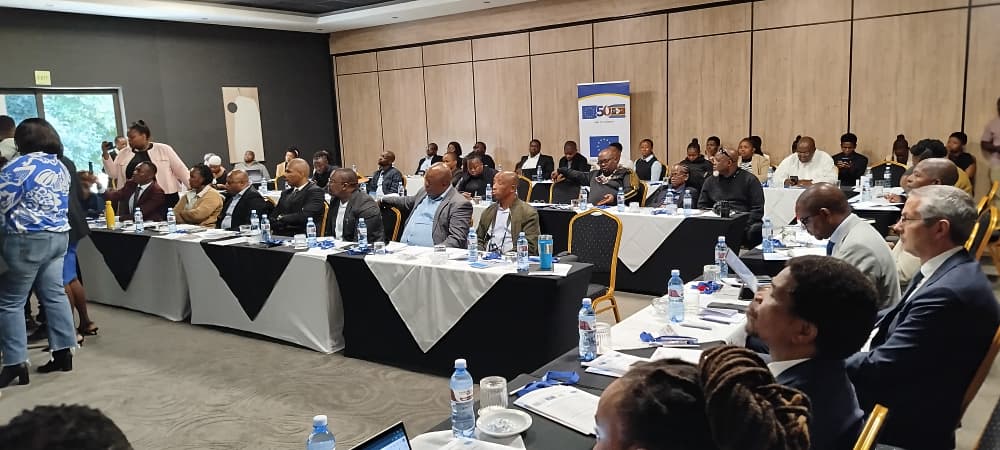
Speaking during World Press Freedom Day commemorations held at Happy Valley on Wednesday, Simelane painted a bleak picture of life inside the country’s newsrooms, where low pay, unstable contracts and limited resources have become the norm.
Simelani said the average journalist in Eswatini earns about E3,500 per month, placing them among the lowest-paid professionals in the country. He noted that many media practitioners work without permanent or long-term contracts, while others are paid per story, making financial stability difficult to achieve.
“In Eswatini, being a journalist often means working with limited resources and without robust infrastructure,” he said. “If we were driven by money, we would not survive in this profession.”


He explained that the financial constraints faced by media houses directly affect the type and depth of stories journalists can pursue. According to Simelani, investigative reporting—especially on sensitive issues such as human trafficking or tax evasion—requires significant funding, sometimes exceeding E10,000 per story.
However, he said most newsrooms are unwilling or unable to allocate such resources, limiting journalists’ ability to uncover critical information and hold powerful individuals accountable.
“Some of the stories we need to investigate are costly. To investigate trafficking of young girls or the evasion of taxes by the elite requires resources that our newsrooms do not want to part with,” he said.
Simelani also highlighted disparities in remuneration, particularly for correspondents and freelancers. He said many are paid less than E1 per word, a figure significantly lower than neighbouring South Africa, where some media organisations pay up to E4 per word.
As a result, he said journalism in Eswatini does not provide a living wage, leaving practitioners unable to afford basic necessities such as health insurance. Many are forced to rely on public healthcare services alongside the general population.
“You can’t afford basic necessities such as health insurance, or any insurance. Journalists are forced to form long queues with the public in hospitals,” he said.
He noted that only those working in public media tend to enjoy relatively better working conditions, while the majority in private media continue to face financial uncertainty.
Simelani attributed part of the problem to a lack of diversity in the media landscape, which he said limits opportunities for competition, growth and improved working conditions.
“There is limited diversity in the media, which translates to fewer radio stations, television stations and newspapers,” he said.
Beyond Eswatini, Simelani said the challenges mirror broader trends affecting media houses across Africa, including declining advertising revenue and rising operational costs. These pressures, he added, force journalists to juggle multiple jobs just to remain in the profession.
He warned that economic hardship among journalists has serious implications for press freedom and democracy.


“When a journalist is worried about rent, transport or the next meal, it becomes harder to ask tough questions, to investigate corruption, or to hold power to account,” he said.
Simelani stressed that a financially weakened media cannot be fully free.
“Freedom is not only the absence of censorship. It also means the ability to work with dignity, with a contract, with fair pay, and with resources to tell stories that matter,” he said.
He called on the Minister of Information, Communications and Technology to investigate the living conditions of journalists and address disparities in remuneration across the sector.
Simelani also urged government to reinstate the Editor’s Forum breakfast meetings, which he said previously played a key role in promoting transparency and accountability.
Meanwhile, Minister of Information, Communications and Technology Savannah Maziya acknowledged the challenges facing the media but warned journalists against compromising their integrity.
Maziya cautioned against the practice commonly referred to as “brown envelope” journalism, where reporters accept payments or incentives in exchange for favourable coverage.
She said such conduct undermines credibility and erodes public trust in the media.
“Journalists must be responsible with their careers and uphold integrity in their reporting,” she said.
The minister also expressed concern about the consolidation of media ownership, warning that it could weaken the media’s oversight role.
“Once there is consolidation of media, there will be no truth—there will be opinions and advertisements instead of factual reporting,” she said.
Maziya further linked declining trust in traditional media to the rapid growth of social media platforms, noting that audiences are increasingly turning to alternative sources such as podcasts for information.
She stressed that ethical journalism grounded in truth and accountability remains essential in restoring public confidence.
World Press Freedom Day is observed annually to highlight the importance of a free and independent press and to assess the state of media freedom globally.
In Eswatini, this year’s commemoration brought into sharp focus not only issues of ethics and credibility, but also the economic realities confronting journalists.


Discussion about this post