



NEW DELHI – Tariffs on majority commodities will be cut in the concluded new India -EU trade deal, unlike what the United States imposed on imports – up to 50% from India and up to 15% on EU goods.
With EU exports to India set to more than double by 2032 from the present 180 billion euros traded for products and services, the accord is predicted to save EU exporters 4 billion euros annually.
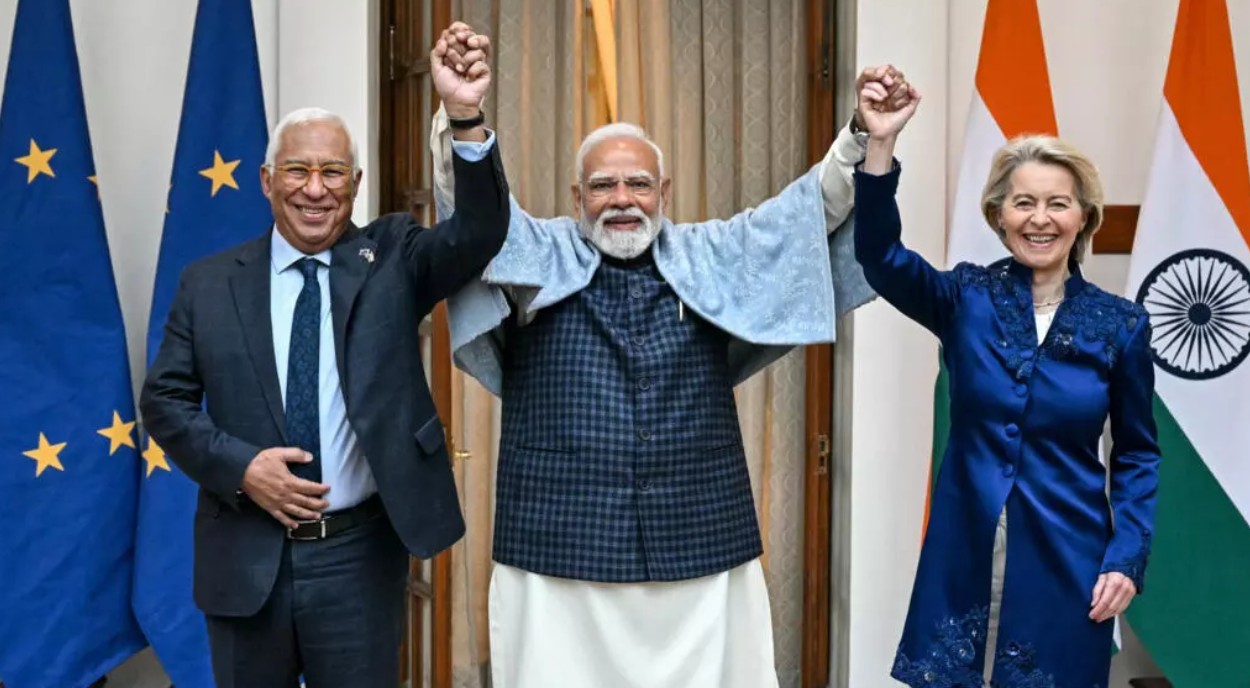
Indian Prime Minister Narendra Modi and European Commission President Ursula von der Leyen struck the deal in the 16th EU-India Summit held in New Delhi, on Tuesday, with both parties sealing the on-and-off deal that has been negotiated for over two decades.
Leyen described this as the “mother of all deals” as it sets to create a massive free trade zone covering nearly 1.4 billion people of India and millions of Europeans. It represents about 25% of global GDP and a third of global trades.


“We are not only making our economies stronger, we are also increasing security for our people in an increasingly unsecure world,” she said.
Modi wrote on X that the India-EU Free Trade Agreement marked a significant milestone in their relations.
“I thank all the leaders of Europe over the years for their constructive spirit and commitment in making this possible. This agreement will deepen economic ties, create opportunities for our people and strengthen the India-Europe partnership for a prosperous future,” Modi said.


It is expected that the EU will double its exports to India by 2032, by eliminating or reducing tariffs on 96.6% of traded goods by value.
The key benefits of the deal include: a more open, stable and predictable business environment faster and simpler customs procedures for EU exporters; preferential access to India’s services market, including financial services and maritime transport; strong protection and enforcement of intellectual property rights, including copyright, trademarks, designs, and trade secrets, and; assistance to small EU businesses to benefit from new export opportunities.
India is set to cut tariffs on cars to 10% over five years from as high as 110%, benefiting European automakers such as Volkswagen, Renault, Mercedes-Benz and BMW, Reuters said. It allows up to 250,000 cars a year valued at over 15,000 euros and will be cut to 30%-35% as soon as the deal is implemented.
There is also cutting of tariffs on alcoholic beverages, including wines, to 75% immediately from 150%, which would be lowered to 20% gradually. Tariffs on spirits will be lowered to 40%, Reuters reported.
Other EU goods coming to India, including machinery, electrical equipment, chemicals and iron and steel, would be cut and enter India duty-free.
India is also going to get flexible rates on the carbon tax and the EU financial support of 500 million euros for over two years to capacitate India in cutting greenhouse gas emissions.



Discussion about this post