




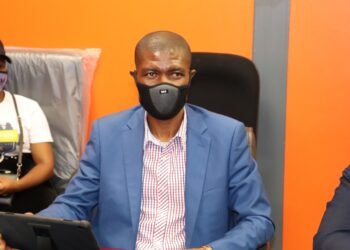
Mbabane – Funduzi Forensic Services director Zakhele Dlamini has mounted a detailed defence against allegations made by AvaPharm director Kareem Ashraf, rejecting claims that he is conflicted, linked to The Luke Commission and operating through a non existent forensic firm, while situating the dispute within wider accountability challenges facing Eswatini’s health sector.
The dispute arises from a forensic audit into aspects of the health sector and pharmaceutical supply chain, a report that was later tabled in Parliament by the Minister for Finance. Ashraf has accused Dlamini of being compromised on the basis that he is allegedly employed by The Luke Commission, arguing that such employment would disqualify him from conducting forensic work in the sector due to a conflict of interest.
Dlamini has rejected the claim outright, stating that he is not employed by The Luke Commission and describing suggestions to the contrary as false and part of a smear campaign. He says his professional work is carried out independently and in line with accepted ethical and forensic standards, adding that no conflict of interest exists in relation to the audit.
He has further argued that even if an individual is involved in the broader health sector, that alone does not amount to a conflict of interest. According to Dlamini, conflicts must be specific, clearly demonstrated and directly connected to the subject under review, conditions he says have not been met in this case.


Ashraf has also claimed that he assisted The Luke Commission on behalf of its owners during a period of financial and technical difficulty and personally facilitated introductions between the hospital’s owners and His Majesty King Mswati III. He has implied that this assistance created a relationship of trust that has since been breached.
Responding to this, Dlamini questioned how such assistance is relevant to the forensic investigation. He maintains that forensic audits are evidence based processes that rely on documentation and analysis and cannot be influenced by personal relationships, past assistance or claims of access to authority.
Dlamini has also rejected assertions that the forensic report amounts to defamation. He states that the purpose of a forensic audit is to establish facts through analysis of records and evidence, not to target individuals. He says discomfort with findings does not turn professional scrutiny into a personal attack.
Ashraf has further questioned the legitimacy of Funduzi Forensic Services, alleging that the entity does not exist and suggesting that the forensic audit was produced under questionable corporate arrangements. He has pointed to the existence of FDZ Forensic Services, arguing that this creates confusion about which entity conducted the work.
Dlamini has dismissed this allegation as misleading. He says Funduzi Forensic Services is a legitimate entity responsible for producing the forensic audit report that was later tabled in Parliament. He has clarified that Funduzi Forensic Services and FDZ Forensic Services are distinct entities and that attempts to conflate them do not invalidate the audit or its findings.
Ashraf has also criticised the inclusion of legal disclaimers in the forensic report, arguing that they undermine the credibility of the findings and signal an effort to limit accountability.
In response, Dlamini stated that disclaimers are standard practice in forensic and audit reports. He explained that such clauses define the scope of work and reliance on information provided and do not weaken the conclusions reached. According to Dlamini, the report was compiled using available documentation and evidence and met the professional threshold required for presentation before Parliament.
Beyond the specific allegations, Dlamini has framed the dispute as part of a broader national challenge. He says Eswatini has long struggled with systemic weaknesses in the health sector, including procurement processes, accountability mechanisms and resistance to oversight.


According to Dlamini, forensic audits often attract hostility because they expose uncomfortable truths. He argues that efforts to discredit auditors instead of engaging with their findings point to reluctance to confront structural problems within the system.
Dlamini maintains that he has nothing to hide. He says his work is transparent, evidence driven and open to scrutiny, and that both his integrity and that of Funduzi Forensic Services can be verified through official records and documentation rather than through allegations and public attacks.

Discussion about this post