



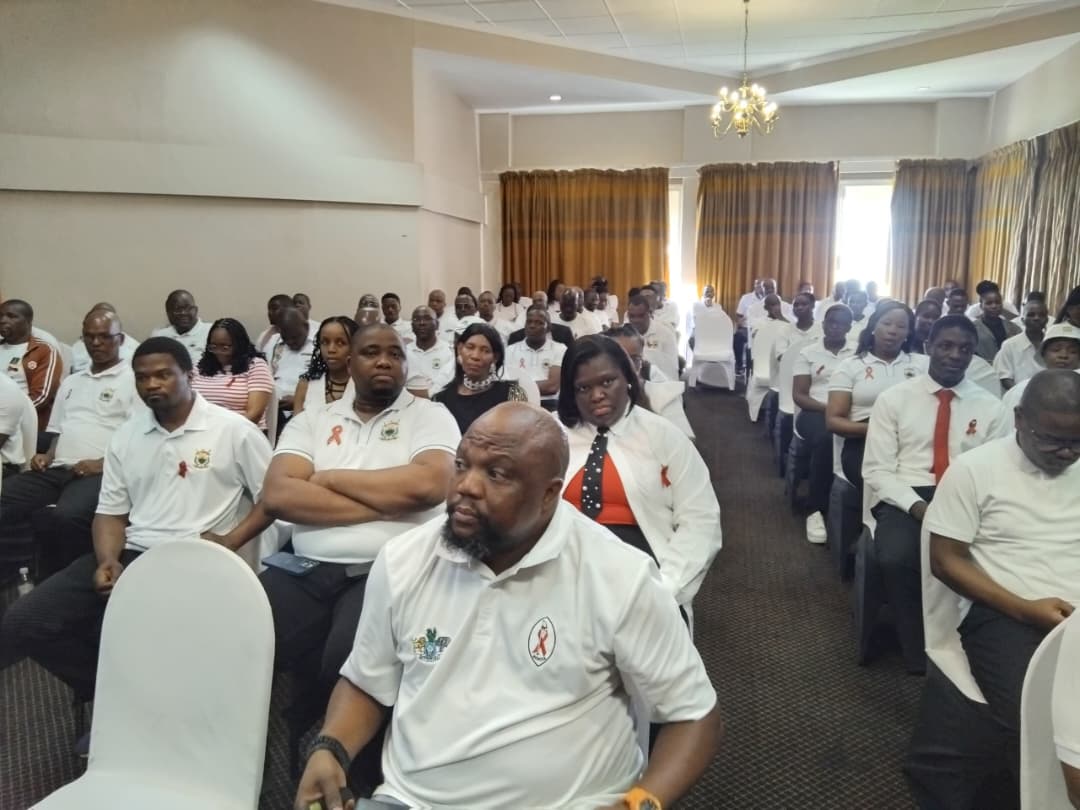
Mbabane –The Municipal Council of Mbabane used this year’s World AIDS Day commemoration to call for a renewed commitment to positive living as fresh data shows both encouraging national progress and ongoing vulnerabilities in the HIV response. The event, held in the capital, brought together health experts, municipal officials and civil society representatives who reflected on why sustained action remains essential.
UNAIDS 2023 statistics shared by the Ministry of Health’s Head of Strategic Information, Bheka Mziyako, show that Eswatini contributes 221898 people living with HIV to the global total of 39 million. Nearly 5000 of these are children. Global trends indicate that new HIV infections have fallen by 59 percent since 1995 and by more than 70 percent since 2010. At national level, Eswatini recorded 3934 new infections among people aged 15 and above in 2022, while 2861 people died from AIDS related illnesses. Worldwide, 1.3 million new infections and 630000 AIDS related deaths were recorded during the same period.
Updated national estimates for 2024 and 2025 confirm that 221931 people are currently living with HIV in a population of 1.17 million. Women account for 60 percent of people living with the virus, while children represent 3 percent. Manzini leads in antiretroviral therapy enrolment with 71884 people on treatment, followed by Hhohho with 53836, Lubombo with 40101 and Shiselweni with 36293.
Despite high treatment coverage, national experts say ten major factors continue to drive infections. These include low condom use, limited testing, poor uptake of pre exposure prophylaxis, disruptions in treatment, poverty, unemployment, early sexual debut, gender based violence, low knowledge of HIV among adolescents and young people, low male circumcision coverage and inter generational sexual relationships.


To address these challenges, the 2024 to 2028 National Strategic Framework prioritises expanded testing for key populations, targeted prevention for high risk groups, better retention in care, removal of social and economic barriers and stronger community led systems. By 2028, Eswatini aims to reduce HIV incidence in those aged 15 and above from 0.62 to 0.31, decrease mother to child transmission to below one percent and cut AIDS related deaths by 70 percent.


Mental health specialists at the Mbabane commemoration said emotional wellbeing remains a critical but often overlooked part of the response. Mental health practitioner Dr Arnold Mafukidze told attendees that many people living with HIV continue to face profound emotional strain even when treatment is successful. His presentation, titled Building Mental Resilience in the Shadow of HIV, pointed to what he termed emotional poverty low self worth and hopelessness that lead to risky sexual behaviour, substance use and treatment lapses.
Through his Heal Well programme, Dr Mafukidze promotes lifestyle based and mindset interventions grounded in clinical research and Stoic philosophy. His recommendations for the Municipal Council of Mbabane include integrating mental health screening into HIV services, training municipal employees to recognise and respond to emotional distress and working with wellness experts to strengthen psychological resilience within communities.
Municipal officials said this year’s message calls for a holistic approach to living with HIV one that restores hope, supports mental strength and empowers every person to take steady steps toward a healthier and more fulfilling life.


Discussion about this post