



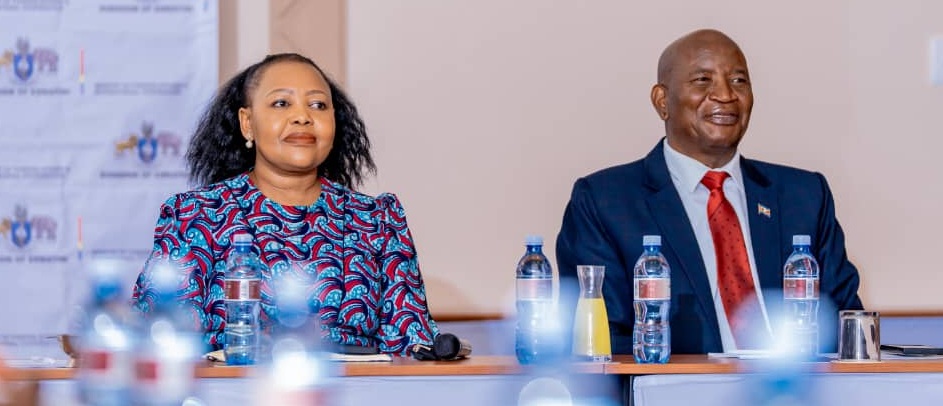
EZULWINI – Minister of Foreign Affairs and International Cooperation Pholile Shakantu says Eswatini political system is more democratic than what is perceived.
“Our system is more democratic than most systems because you are directly representing the people. You leave your constituency to parliament directly. You are able to talk to the government on a daily basis,” she said.
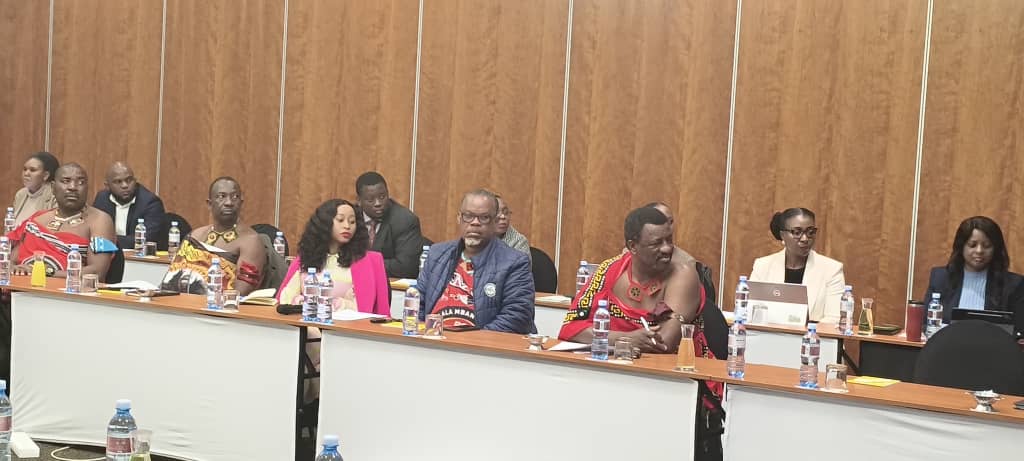
Shakantu was addressing Senators on Monday at the Royal Villas, Ezulwini, where the ministry opened up its portfolio to legislators and what the Eswatini position is when explaining its political system set-up. She said it was the ministry’s mandate to educate other countries about the political set-up, adding that Eswatini has been able to maintain its political structure that predates the colonial era.
The meeting also sensitised senators on its four main pillars, being diplomacy, economic advancement, cultural promotion and international cooperation on bilateral and multilateral levels.

The minister said the Tinkhundla-based system was not only constitutional, but it preserved the Emaswati way of life.
Shakantu said that the constitution went through extensive consultations from Emaswati prior to His Majesty King Mswati III signing it off.
The minister said it was Emaswati made the submissions that make the provisions of the constitution, choosing to have their way of life engraved in it.


For that reason, she said, the Eswatini constitution categorically states that the country is a kingdom and it is ruled by a king and the queen mother.
Shakantu said the constitution highlights all traditional structures that have been preserved prior to being a British protectorate.
“Our constitution which is 20 years old since 2005 shows all the institutions that were there before we became a British protectorate.
“The historical background is misinterpreted to the point where it is said Eswatini is a dictatorship and all the powers are rested with the king. This is not true,” Shakantu said.
The minister said that it is known that there was separation of powers of the executive, legislature and the judiciary which operate independently of each other.
“Senators know that we have three arms of government that operate independently. Our constitution is very modern. What is different is that unlike other countries, we were able to redesign our political structure. Other African countries retained the constitutional model that was left by colonisers. We chose that we did not want to elect people into parliament based on political party representation. But we have tinkhundla. We have chiefdoms. We want someone to represent us direct from the constituency which is direct representation,” Shakantu said.
The minister said that direct representation was not totally unique to Eswatini, adding that other countries have a similar system.
“Yes, we are unique. We have preserved our indigenous political governance and our legal system, the Eswatini Law and Custom. We pride ourselves with our heritage as a country,” she said.
She appeals to the senators to be able to define the political system with ease whenever called to do so.



Discussion about this post