



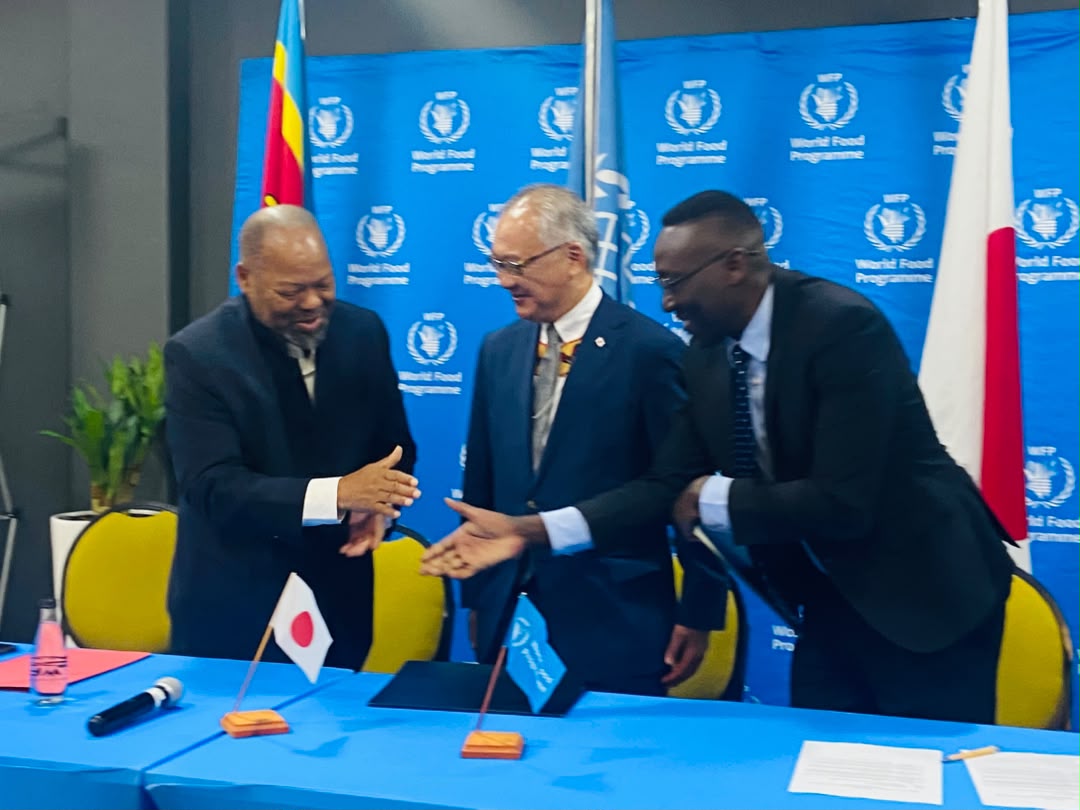
MBABANE – At least 27 500 orphans and vulnerable children aged between two and six years across Eswatini are expected to benefit from a JPY 200 million (approximately E21 million) food assistance grant from the Government of Japan.
The grant, implemented through the United Nations World Food Programme (WFP), will support the provision of nutritious meals to children attending Neighbourhood Care Points (NCPs) across the country’s four regions.
The agreement was signed on Thursday at the United Nations House in Eswatini, marking another milestone in the longstanding development partnership between Japan and Eswatini.
Speaking during the ceremony, Minister for Economic Planning and Development Dr E.T. Gina expressed gratitude to the Government and people of Japan for their continued support, describing the partnership as one founded on solidarity, mutual respect and sustainable development.


He said the assistance came at a critical time as the country continued to face food-security challenges linked to unpredictable weather patterns, climate shocks and global economic pressures.
Gina emphasised that the grant represented more than emergency relief, highlighting the importance of nutrition in protecting human dignity, improving public health and supporting children’s growth and development.


According to WFP Representative Nanga Kaye, the funding will enable the organisation to provide daily nutritious hot meals to approximately 27,500 vulnerable children at Neighbourhood Care Points.
Kaye said Japan had consistently supported Eswatini since 2019 and remained WFP Eswatini’s main donor, demonstrating its commitment to improving the lives of vulnerable communities.
He added that the initiative aligned with the Government’s Neighbourhood Care Point Strategy for 2023–2027 and WFP’s Country Strategic Plan, which prioritise social protection for vulnerable populations.
Meanwhile, Japan’s Ambassador to Eswatini, Shimizu Fumio, said the project would provide several food commodities, including 90 tonnes of canned fish from Japan, 453.75 tonnes of locally sourced white maize, 40.68 tonnes of beans and 57.69 tonnes of vegetable oil.
The supplies are intended to ensure that children receive at least one hot meal five days a week, helping improve their food and nutritional security.
Fumio said food and nutrition security were essential to ensuring that children could learn, develop and benefit from educational opportunities without hunger standing in their way.
Beyond food assistance, Japan continues to support Eswatini’s development through education and infrastructure initiatives. These include the construction of schools and the provision of buses designed to improve educational access for children with disabilities.
Gina also highlighted Eswatini’s planned participation in GREEN EXPO 2027 in Yokohama, Japan, where the country will have an opportunity to showcase its agricultural heritage, horticultural products and green development priorities.
He assured Japan and WFP that the government remained committed to transparent oversight, effective implementation and accountability to ensure that assistance reached its intended beneficiaries.
While the grant will address immediate nutritional needs, the government stressed that its broader goal remains strengthening agricultural resilience, climate adaptability and long-term food self-sufficiency.
The initiative reinforces the importance of international cooperation in protecting vulnerable children and building a more food-secure future for Eswatini.


Discussion about this post