



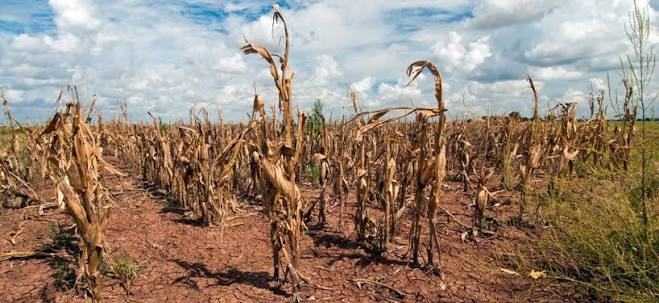
Manzini – The African Union Commission has called for stronger investment in weather monitoring and early-warning systems as the continent prepares for a potentially severe 2026/27 El Niño.
AU Commissioner for Agriculture, Rural Development, Blue Economy and Sustainable Environment Moses Vilakati said expert analyses suggested the coming El Niño could rival or exceed the 2015/16 and 2023/24 episodes in magnitude.
Vilakati was speaking during the opening of the 17th EUMETSAT User Forum in Africa at Esibayeni Lodge in Manzini on Tuesday.
He said previous El Niño episodes had resulted in loss of lives, destruction of livelihoods and infrastructure and the reversal of development gains.

“Currently, we face a looming challenge: the 2026/2027 El Niño,” Vilakati said.
“Past El Niño episodes left deep and painful marks through lost lives, destroyed livelihoods and infrastructure, and erased development gains. Yet, expert analyses suggest that the 2026-2027 El Niño could rival or exceed the 2015-2016 and 2023-2024 episodes in magnitude.”
He said the possible severity of the coming weather event made stronger partnerships and investment in climate services increasingly important.
Vilakati called on development partners to provide sustained financial and technical support to expand climate services and early-warning systems across the continent.
He also called for the continued upgrading of Preparation for the Use of Meteosat (PUMA) stations, expansion of ground observation networks and faster transfer of technology, particularly in the use of next-generation satellite products.
The AU commissioner further called for increased African-led research and innovation in meteorology and climate services.
The forum is focused on advancing satellite meteorology, early-warning systems and the integration of Meteosat Third Generation (MTG) data into African weather forecasting.
Vilakati said satellite-based meteorological information was particularly important for Africa because the continent’s weather observation network remained below internationally recommended density.
He said this was compounded by the dependence of many African economies on agriculture.
The AU, with funding from the European Union through the ClimSA project, has completed the installation of PUMA and ClimSA-Climate stations in 48 of the 49 intended countries, according to Vilakati.


The infrastructure also includes two regional training centres, five regional climate centres and two partner institutions.
Vilakati said the stations formed part of Africa’s early-warning infrastructure by enabling the timely detection and communication of extreme weather events and other climate-related hazards.
He said the Africa-Europe partnership on Earth Observation technology had evolved over more than two decades, beginning with the PUMA project and later expanding through initiatives such as ClimSA and the Strengthening Early Warning Systems in Africa project.
“The strengthening of our partnerships is more critical than ever,” Vilakati said.
The five-day forum brings together African and European meteorological experts, representatives of regional economic communities, member states and development partners to discuss weather forecasting, early-warning systems and the use of MTG satellite data.


Discussion about this post