



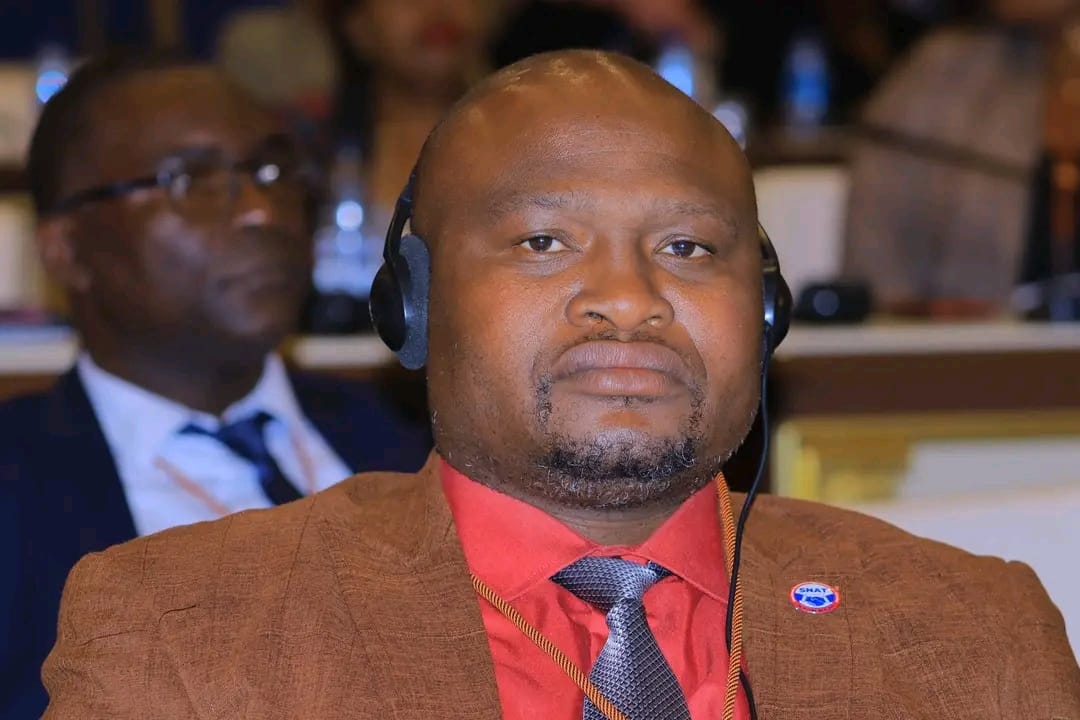
Ezulwini- Teachers should start receiving artificial intelligence (AI) and information and communication technology (ICT) training at tertiary level to ensure they enter classrooms prepared for an increasingly technology-driven education system.
Swaziland National Association of Teachers (SNAT) Secretary General Lot Vilakati said teacher training colleges and universities could no longer treat ICT as an additional skill, arguing that future educators needed to be prepared to use AI and other digital technologies as part of their everyday teaching.
He was speaking on teaching October 6,2026 during the second day of the Pan-African Conference on Teacher Education and Development (PACTED) 2026 at the Ezulwini Palazzo International Convention Centre, where delegates from across Africa are discussing the responsible integration of AI into education.
The SG said the country needed to prepare teachers before they entered the classroom rather than expecting them to acquire AI and digital skills after they had already joined the profession.


He called for ICT and AI training to be strengthened at tertiary institutions so that newly qualified teachers could use technology confidently when teaching learners.


The SNAT secretary general said the challenge, however, was not limited to teacher training.
He said Government must also ensure that schools had the necessary infrastructure for teachers to put their digital skills into practice, including installing smartboards in classrooms.
Vilakati said Eswatini should move beyond an approach where computer laboratories were regarded as the main means of exposing learners to technology.
“We have moved to the era where we are talking about AI, where everyone should be in a position to use AI,” he said.
He argued that digital technology should be available inside classrooms, where teachers and learners could use it as part of the learning process.
Vilakati said the Government should make it a priority to ensure that schools had smartboards in all classrooms, saying access to technology should not be limited to selected rooms or facilities.
He said the changing technological environment was also being driven by the fact that children were becoming familiar with digital devices at increasingly young ages.
According to Vilakati, children could already understand and operate smartphones from the early stages of their education, including using them to play games.
He said this presented a challenge for the education system because some learners could enter school with considerable familiarity with technology while some teachers might still be struggling with basic digital tools.
“The children are already using smartphones from Grade Zero. They understand smartphones because they use them to play games,” he said.
Vilakati said teacher preparation therefore had to keep pace with the technological environment in which learners were growing up.
He said teachers could not be expected to guide learners in using AI responsibly if they had not themselves been adequately trained in the technology.
The call comes against a wider concern raised during PACTED 2026 that willingness among teachers to use AI does not necessarily translate into effective classroom use.
Delegates have been examining how African education systems can move from simply discussing AI policies to addressing the practical challenges that teachers face when attempting to use the technology.
Among the concerns are teacher preparedness, infrastructure and the availability of support systems to help educators integrate AI into teaching.
The discussions have highlighted the gap between the growing availability and use of digital technology and the readiness of education systems to incorporate it effectively.
For Vilakati, closing that gap requires action at two levels: preparing teachers with AI and ICT skills during their tertiary education and ensuring schools have the equipment needed to use those skills.
He said smartboards and other digital tools should therefore become part of ordinary classroom teaching rather than remaining technologies available only in specialised facilities.
The PACTED 2026 discussions are taking place from October 5 to 7 under a gathering that brings together African education ministers, policymakers, teacher unions, researchers, education experts and international development partners.
The conference was officially opened by Minister of Education and Training Owen ‘Handsome’ Nxumalo alongside representatives of the African Union Commission.
The conference’s AI discussions come as African countries continue to consider how technology can be integrated into education while ensuring that teachers remain equipped to guide learners in its responsible use.
For SNAT, Vilakati’s message is that the preparation must begin before teachers enter the profession and must be matched by investment in the classrooms where they will eventually teach.


Discussion about this post