



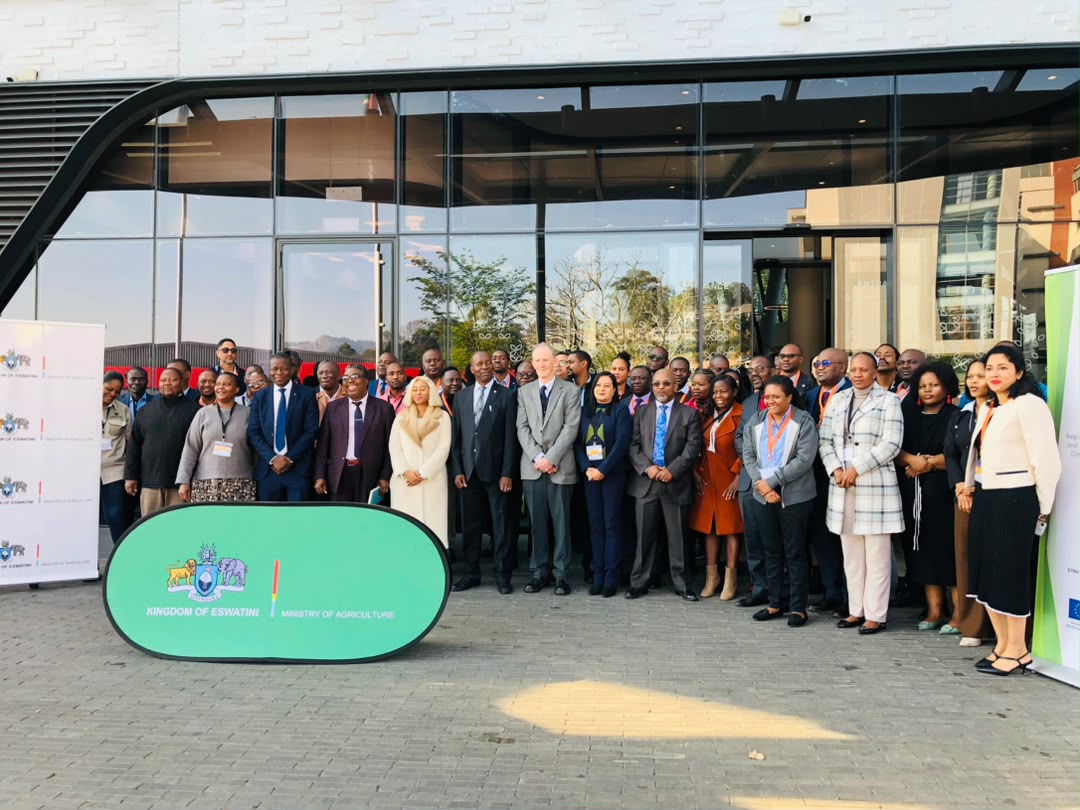
MBABANE – The Kingdom of Eswatini has reaffirmed its commitment to strengthening regional collaboration in the fight against Foot and Mouth Disease (FMD) as it hosted the Southern Africa Sub-Regional Workshop on FMD Prevention and Control at the Hilton Garden Inn in Mbabane.
The three-day workshop, attended by delegates from all 16 SADC member states, was officially opened by the Minister of Sports, Culture and Youth Affairs, Bongani Nzima, on behalf of the Minister for Agriculture, Mandla Tshawuka.
In his opening address, Minister Nzima emphasized that livestock production remains one of the pillars of Eswatini’s agricultural economy, contributing significantly to food security, household incomes, employment creation and the country’s cultural heritage. He noted that cattle and goats are not only valuable economic assets but also hold deep social and traditional significance for many communities.
The Minister highlighted the devastating impact of the Foot and Mouth Disease outbreak that struck Eswatini in May 2025, describing it as the most difficult outbreak the country has faced. While Eswatini successfully contained previous outbreaks in 1965, 1969 and 2000, the 2025 outbreak severely disrupted livestock production, affected domestic trade and resulted in the loss of key international markets, including access to the European Union beef market.


“The 2025 outbreak has been the hardest to contain. It disrupted livestock productivity, affected domestic trade and cost the Kingdom most of her international markets, including the EU beef market,” he said.
Minister Nzima welcomed the World Organisation for Animal Health (WOAH) for selecting Eswatini to host the regional workshop, noting that this marks the fourth WOAH workshop held in the Kingdom since 2011. He said the decision reflects confidence in Eswatini’s ability to host regional initiatives aimed at strengthening veterinary services.


He stressed that combating Foot and Mouth Disease requires more than emergency responses, calling for a well-trained workforce, stronger surveillance systems, rapid disease detection and reporting, coordinated control measures, and close collaboration among governments, veterinary professionals, livestock producers, the private sector and development partners.
Recognizing FMD as a transboundary disease, the Minister underscored the importance of regional cooperation, saying diseases do not respect national borders. He urged SADC member states to strengthen information sharing, surveillance, emergency preparedness and response mechanisms through partnerships with organizations such as WOAH, SADC, COMESA and the Food and Agriculture Organization (FAO). The workshop brings together veterinary experts, policymakers and animal health professionals to enhance knowledge and practical skills in FMD prevention, surveillance,

Discussion about this post