



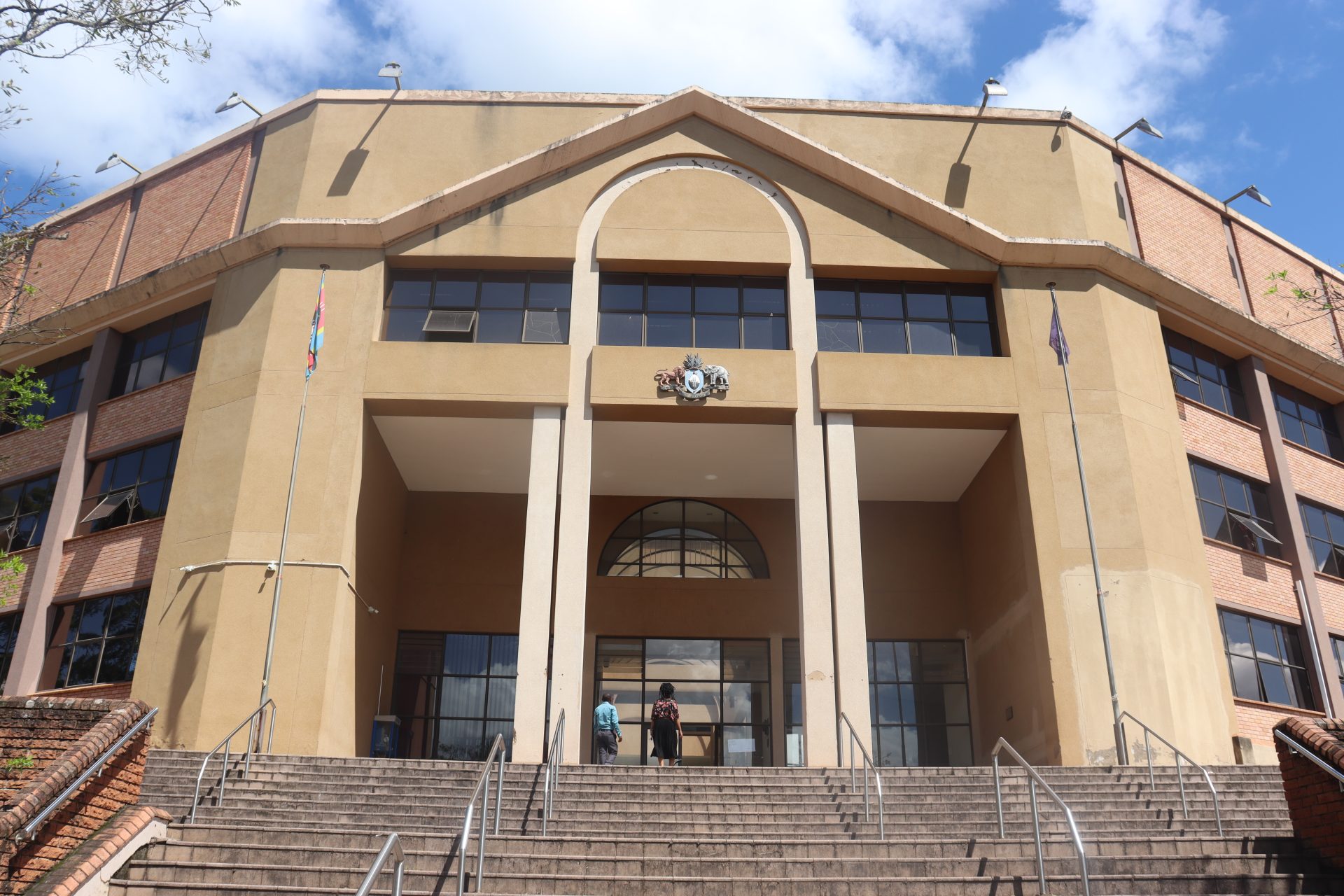
MBABANE – The High Court has dismissed an application challenging the validity of provisions in the late Bishop Jobe Mkhatshwa’s will that named his son, Mike Mandla Mkhatshwa, as successor to the leadership of Enkhosini Apostolic Church in Zion.
In a judgment delivered on Thursday, High Court Judge Bonginkosi Magagula ruled that the applicants had failed to prove that the church was a separate legal entity distinct from its founder and therefore failed to establish that it could not form part of the deceased’s estate.
The case arose from a bitter succession dispute within the church following the death of Bishop Mkhatshwa, who founded and led Enkhosini Apostolic Church in Zion until his death. The dispute pitted family members and church members against Mike Mandla Mkhatshwa, whom the late bishop named in his will as his successor.
The applicants, led by Cedzani Petronella Mkhatshwa, sought a court order declaring that the church did not belong to the deceased and therefore could not be inherited. They further asked the court to declare clauses 7, 8 and 9 of the late bishop’s will null and void and to set aside a communication issued by the League of African Churches relating to the leadership dispute.


At the centre of the dispute were provisions in the will directing that Mike Mandla Mkhatshwa inherit “the church Enkhosini Apostolic Church in Zion” and become the surviving bishop upon the death of the founder. The will further directed that all church branches, both within and outside Eswatini, submit to his authority.
The applicants argued that the church belonged to its membership and leadership structures rather than to the deceased personally. They relied on documents they described as church constitutions, contending that these showed that succession should be determined collectively by church structures rather than by testamentary appointment.
However, Judge Magagula found that the applicants had failed to prove that the church possessed a juristic personality separate from its founder and members.“The applicant bears the burden of proving that the church constituted a voluntary association whose governing documents prohibited the deceased from nominating a successor,” the judge stated.
He found that the constitutions relied upon by the applicants were unsigned, their authors were unknown, and there was no evidence showing they had been adopted by the congregation. No confirmatory affidavits had been filed by individuals involved in drafting them.
The court further found that even if the documents were accepted as having some evidential value, they did not establish ownership of the church in anyone other than the deceased founder.
According to the judgment, the evidence showed that Bishop Mkhatshwa founded the church, established it at his homestead in Mahlapatsini, later relocated its operations to Ebusweni in Macetjeni, and exercised uninterrupted authority over its affairs throughout his lifetime.
“There is no evidence before court that any congregation, synod, conference, executive committee or governing body ever curtailed those powers,” Judge Magagula said.
The court also emphasized the principle of freedom of testation, which allows individuals to dispose of their property through a will as they see fit, subject to limited legal restrictions.
Judge Magagula noted that the will enjoyed a presumption of validity and that no challenge had been made regarding its formal execution, the deceased’s testamentary capacity, fraud, duress, undue influence or authenticity.


“No proceedings have been instituted seeking to set aside the will in its entirety,” he said.The judge stressed that courts do not invalidate wills lightly and will only interfere where recognised legal defects have been established.
On the disputed clauses, the court held that the applicants had not demonstrated that the provisions were unlawful, contrary to public policy, impossible to perform or in conflict with any statutory provision.Instead, Judge Magagula found that clauses 7 and 8 could reasonably be interpreted as expressing the deceased’s intention regarding succession to church leadership rather than necessarily constituting a transfer of ownership of a separate juristic entity.
“A sensible interpretation of clauses 7 and 8 reveals that the deceased intended Mike Mandla Mkhatshwa to succeed him as spiritual leader of the church,” the judgment stated.
The court also declined to invalidate clause 9, which directs that individuals causing instability within the church should be reported to police and removed from membership.
The judge ruled that the clause created no criminal offence, compelled no unlawful conduct and merely recorded the deceased’s wishes regarding church discipline.Judge Magagula further cautioned against conflating disputes over church governance with the validity of testamentary provisions.
“The fact that members of the congregation may dispute the deceased’s chosen successor does not render the testamentary provisions unlawful,” he said.
The court also invoked constitutional protections of freedom of religion, saying courts must exercise restraint when dealing with internal ecclesiastical disputes. “The judicial function is not to determine who is spiritually entitled to lead a church. Nor is it the function of the court to select a bishop for a religious community,” the judge said.
He added that invalidating the disputed clauses without a recognised legal basis would amount to an unwarranted intrusion into the internal affairs of a religious organisation.
The court also dismissed the applicants’ challenge to a communication issued by the League of African Churches.
Judge Magagula found that the communication merely expressed the organisation’s understanding of the dispute and did not constitute an administrative or quasi-judicial decision affecting rights.
Finding that the applicants had failed to discharge the burden of proof required for the declaratory relief sought, the court dismissed the application in its entirety.
Costs were awarded against the applicants.The ruling effectively leaves intact the provisions of Bishop Mkhatshwa’s will naming Mike Mandla Mkhatshwa as successor, although the judgment noted that broader disputes regarding church governance and leadership may still require determination in separate proceedings.

Discussion about this post