



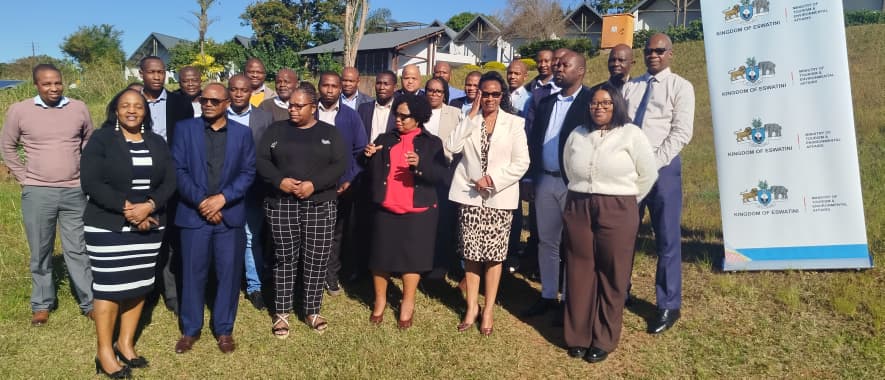
Government has reaffirmed its commitment to the highest standards of nuclear safety, stating that the validation of nuclear safety regulations is not merely a technical exercise but a solemn responsibility aimed at protecting citizens, the environment and future generations.
This was said by Minister of Tourism and Environmental Affairs, Jane Mkhonta-Simelane, during the official closing of the Workshop on the Validation of the Draft Nuclear Safety Regulations held at Sibane Sami Hotel on Monday.
Addressing senior government officials, private sector stakeholders, users of nuclear-related technologies and media personnel, Mkhonta-Simelane said the country was taking important steps to strengthen its regulatory framework and ensure that nuclear technologies are managed safely and responsibly.
She described the validation process as a critical milestone in enhancing the country’s preparedness and ensuring that safety measures remain aligned with international standards.


“Today, we gather to reaffirm our unwavering commitment to the highest standards of nuclear safety. The validation of our nuclear safety regulations is not merely a technical exercise; it is a solemn responsibility to protect our citizens, our environment and future generations,” she said.
The minister noted that while nuclear energy and nuclear technologies have the potential to contribute significantly to national development, they also require strict oversight and continuous vigilance.
She said lessons from past international nuclear incidents had demonstrated the importance of maintaining robust regulatory systems that evolve alongside scientific and technological advancements.
“Nuclear energy, while a powerful tool for progress, demands vigilance. The lessons of history remind us that safety cannot be compromised and regulation must evolve with science, technology and global best practices,” she said.
According to the minister, the validation process has involved extensive consultation with stakeholders, rigorous inspections and independent reviews to ensure that the regulations are comprehensive and effective.


She said the regulations now incorporate modern approaches to risk assessment, emergency preparedness and environmental protection.
“These regulations reflect the latest advancements in risk assessment, emergency preparedness and environmental protection. They are designed not only to prevent accidents but also to build public trust in our energy systems,” she said.
Mkhonta-Simelane emphasised that public confidence was a key component of any successful nuclear safety programme, adding that transparency and accountability were essential in ensuring that citizens remain assured that their safety is prioritised.
She reiterated government’s position that safety remains non-negotiable and said the validation of the regulations demonstrates the country’s commitment to responsible governance and sound environmental management.
“Our message today is clear: safety is non-negotiable. By validating these regulations, we demonstrate accountability, responsibility and foresight,” she said.
The minister further pledged that government would continue to review and improve the regulations as circumstances evolve, ensuring that the country’s nuclear safety framework remains relevant and effective.
She said collaboration with scientists, engineers, international partners, industry users and the public would remain central to the implementation and continuous improvement of the regulations.
Mkhonta-Simelane also acknowledged the contributions made by stakeholders throughout the development of the parent legislation and the draft regulations currently undergoing validation.
She commended participants for their professional input and constructive engagement, which she said had played a crucial role in strengthening the regulatory framework.
Addressing users of nuclear-related technologies and materials, she encouraged continued compliance with the country’s nuclear laws and regulations.
The minister urged them to maintain close cooperation with the Environment Department and the newly established regulatory authority to ensure effective implementation of the legal framework.
“I have been informed by your quest to remain compliant with the nuclear laws for the safety of emaSwati and the environment. Continue to engage with the Environment Department as well as the newly established Authority for effective implementation,” she said.
The workshop forms part of ongoing efforts to strengthen Eswatini’s regulatory systems governing the safe use, handling and monitoring of nuclear materials and technologies, while ensuring the protection of public health and the environment.


Discussion about this post