



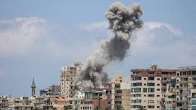
Global oil markets remained volatile on Thursday as the United States and Iran exchanged military strikes for a second consecutive day, raising fears of a broader conflict in the Middle East and prompting fresh concerns over inflation and economic growth worldwide. The growing tensions also triggered a significant monetary policy response from the European Central Bank (ECB), which raised interest rates for the first time since 2023.
Oil prices surged after renewed hostilities between Washington and Tehran intensified concerns about disruptions to energy supplies from the Gulf region. Market analysts warned that the Strait of Hormuz, one of the world’s most important oil shipping routes, remains at the centre of investor anxiety as military activity continues.
The latest escalation follows a second day of US airstrikes targeting Iranian military and surveillance infrastructure. American officials described the attacks as defensive measures following attacks on US interests in the region. Iran responded by launching missiles at several US military facilities across the Middle East, although reports indicate that many of the projectiles were intercepted.
President Donald Trump warned that the United States would strike Iran “very hard” if a diplomatic breakthrough is not achieved, a statement that further rattled financial markets and energy traders. Oil prices settled nearly $2 higher on Wednesday as investors priced in the growing risk of supply disruptions.


The situation worsened after reports emerged that Iran had moved to close the Strait of Hormuz to maritime traffic following recent US attacks. The waterway carries a significant portion of the world’s oil exports, and any prolonged disruption could have severe consequences for global energy supplies. Oil prices jumped more than two percent following the announcement.
Analysts at Rystad Energy warned that crude oil prices could climb as high as $150 per barrel if the conflict develops into a full-scale confrontation. Brent crude has already risen to around $93 per barrel, while market volatility remains elevated amid uncertainty over whether diplomacy or military escalation will prevail.


Against this backdrop, the European Central Bank announced a 25-basis-point increase in its key interest rates, citing inflationary pressures stemming from the Middle East conflict. The ECB raised its deposit rate to 2.25 percent and lifted its inflation forecast for the eurozone after energy prices pushed annual inflation above three percent.
ECB President Christine Lagarde said the war in the Middle East was generating inflation pressures and creating uncertainty for economic growth across the eurozone. The bank also lowered its growth projections, warning that prolonged energy supply disruptions could further weaken consumer spending, investment and industrial production.
Financial markets worldwide have reacted nervously to the developments, with stocks retreating and investors shifting toward safer assets. Economists warn that sustained high oil prices could reignite inflation globally, forcing central banks to maintain higher interest rates and increasing the risk of slower economic growth.



Discussion about this post