



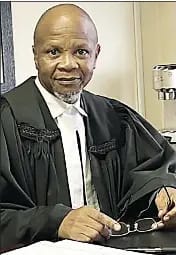
MBABANE – A mechanic seeking E2 million in damages from the police and government has won the first round of his legal battle after the High Court ruled that he was unlawfully arrested, detained, assaulted and tortured by police officers investigating the alleged theft of tractor parts.
In a judgment delivered on June 4, 2026, High Court Judge Sabelo Masuku found that Sandile William Hlongwane’s arrest and detention in August 2020 were unlawful and declared that he was assaulted and subjected to torture while in police custody.
The court, however, dismissed Hlongwane’s claim for damages arising from alleged injury to his reputation and dignity, which he had framed as defamation.
Hlongwane had sued the National Commissioner of Police and the Government of Eswatini for E2 million in damages under various heads, including unlawful arrest, wrongful detention, assault, pain and suffering, and alleged defamation.


According to evidence before the court, Hlongwane, a mechanic who had worked for businessman Cedric Ngwenya since 2014, was summoned to the Manzini Police Station on August 15, 2020 by Detective Constable Siyabonga Shiba.
Police were investigating allegations that tractor parts belonging to Ngwenya had been stolen.
Hlongwane testified that after denying the allegations, police officers assaulted him and attempted to force a confession. He told the court that he was tied to a wooden bench known as a “donkey”, handcuffed underneath it and had a plastic bag placed over his head, causing him to suffocate.
He further testified that he was detained overnight and taken the following day to his family homestead at Ka-Ndzangu while handcuffed, where police searched for tractor parts.
The defendants denied that the arrest was unlawful and disputed claims that Hlongwane had been assaulted or tortured.
However, after reviewing the evidence, Judge Masuku found significant shortcomings in the police investigation.
The judge noted that the complainant, Ngwenya, did not provide police with a list of the allegedly stolen tractor parts before Hlongwane’s arrest.
The court further found that investigators were unable to establish with certainty what items were allegedly stolen before arresting the mechanic.
“On the totality of the evidence, it is difficult to accept that the police had knowledge of what specific items they were investigating prior to effecting the arrest,” Judge Masuku stated.
He added that in the absence of an inventory or proper particulars of the allegedly stolen property, the police could not be said to have had reasonable grounds to suspect that Hlongwane had committed theft.
The court therefore concluded that the defendants had failed to discharge the legal burden of proving that the warrantless arrest was lawful.
Judge Masuku also accepted Hlongwane’s account that he had been assaulted and tortured while in custody.
The court found support for his version in the testimony of independent witness Themba Tsabedze, who said he saw Hlongwane handcuffed and crying in a police vehicle and noticed blood coming from his nose.
Tsabedze testified that Hlongwane told him he had been beaten and “tubed” by police officers.
The judge further noted that the police officers implicated in the alleged torture did not meaningfully challenge Hlongwane’s evidence during the trial.
“Having considered the evidence in its totality, including the plaintiff’s account, the corroborative evidence of Pw3 regarding the plaintiff’s physical condition and distress, and the absence of any meaningful denial by the implicated officers, I find on a balance of probabilities that the plaintiff was assaulted and subjected to torture, including suffocation with a plastic bag, while in police custody,” the judge ruled.
Judge Masuku described the conduct as a gross violation of Hlongwane’s constitutional rights to dignity, freedom and security of the person, as well as protection from torture and cruel, inhuman or degrading treatment.
The court found that the assault and torture were committed in an attempt to extract a confession regarding the alleged theft.


Despite succeeding on the unlawful arrest and torture claims, Hlongwane was unsuccessful in his claim relating to damage to his reputation.
The mechanic had argued that police humiliated him by parading him through his community while handcuffed and presenting him as a thief.
The court held that although such conduct may have been improper, Hlongwane failed to prove that it caused actual harm to his reputation or social standing.
Judge Masuku found that no evidence had been led to show that members of the community shunned him or that his standing in society had been diminished as a result of the incident.
As a result, that portion of the claim was dismissed.
The court entered judgment in Hlongwane’s favour on the unlawful arrest, detention, assault and torture claims, but postponed determination of the amount of damages to a later hearing.
Hlongwane will now return to court to quantify the compensation he seeks from the police and government.
The issue of damages was postponed indefinitely, with the court directing him to approach the registrar for a hearing on quantum in due course.
Costs were reserved pending the determination of damages.

Discussion about this post