



Mbabane: Government has denied receiving any communication from the United Arab Emirates following reports that the Gulf state is lobbying selected countries, including Eswatini, to recognise Somaliland.
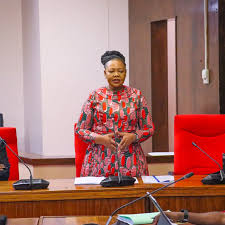
The Principal Secretary (PS) in the Ministry of Foreign Affairs and International Cooperation Sizwe Ntshangase said the country had not been approached on the matter.
“Please be advised that we have not received such correspondence from the UAE,” the PS said in response to questions.
The response follows reports published by Somaliguardian, which alleged that the UAE had initiated a diplomatic campaign encouraging a number of countries to extend recognition to Somaliland.
According to the reports, which cited unnamed sources within the federal government of Somalia, Eswatini was among the countries allegedly targeted, alongside Argentina, the Dominican Republic and Zambia.
The same reports further alleged that the diplomatic outreach included the offering of financial or strategic incentives to countries as part of efforts to secure recognition for Somaliland. No figures or details of such incentives were provided, and no official documentation has been made public.
The UAE has not issued a public statement responding to the allegations.
Somaliland declared independence from Somalia in 1991 following the collapse of the central government in Mogadishu. The region has since maintained its own governing institutions, security structures and electoral processes, but has not received widespread international recognition.
The federal government of Somalia continues to regard Somaliland as part of its sovereign territory and has consistently opposed any attempts to recognise it as an independent state.
Reports indicated that any potential recognition moves could be linked to May 18, a date observed in Somaliland as the anniversary of its declaration of independence.
None of the countries named in the reports, including Eswatini, have publicly confirmed any intention to recognise Somaliland.
Eswatini’s Ministry of Foreign Affairs and International Cooperation has not indicated any change in the country’s diplomatic position regarding Somalia or Somaliland.
The matter remains unconfirmed by the governments alleged to be involved, with the only official response from Eswatini being that no correspondence has been received from the UAE.
The reports suggest that any potential recognition moves could be timed around May 18, a date Somaliland marks as the anniversary of its 1991 declaration of independence.
This has added a layer of urgency and symbolism to the claims, with Somaliland officials in recent weeks hinting at possible diplomatic breakthroughs.
Although government has dismissed the reports, Eswatini’s inclusion in the alleged UAE lobbying effort has drawn attention to its foreign policy positioning.
The country has, in the past, taken distinctive diplomatic stances, most notably maintaining formal relations with Taiwan, making it the only African state to do so.
Somaliland also maintains informal ties with Taiwan, including cooperation in development projects such as health infrastructure. Some analysts have suggested that these parallel relationships may be viewed by external actors as a potential diplomatic bridge.
However, there is no official indication that Eswatini is considering any shift in its policy regarding Somaliland.


According to analysts, any move by an African country to recognise Somaliland would have significant implications for the African Union, which has long upheld the principle of respecting inherited colonial borders.
It is said this stance has been central to preventing secessionist conflicts across the continent, and deviations from it are typically approached with caution.
As a member of the African Union, Eswatini would be expected to weigh such considerations carefully in any foreign policy decision involving territorial recognition.
The reports also underscore the growing diplomatic and economic footprint of the United Arab Emirates in Africa and the Horn of Africa in particular.
The Gulf state has invested heavily in infrastructure, ports, and logistics across the region, and has increasingly played a role in political and security matters.
While its exact involvement in the Somaliland recognition issue remains unclear, the allegations suggest an attempt to shape geopolitical alignments in a strategically important region.

Discussion about this post