



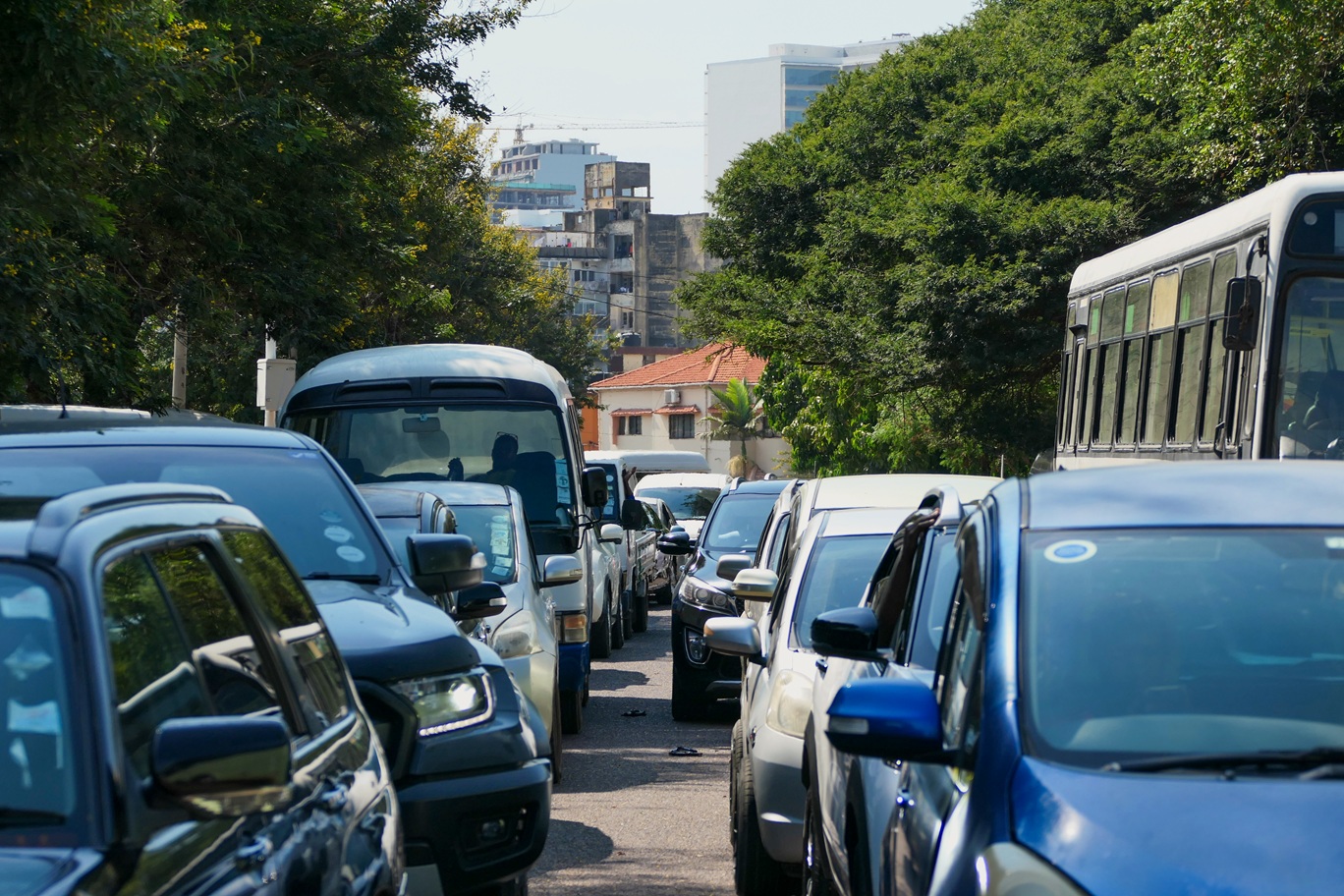
Petrol stations in Maputo have shut their pumps or capped purchases as a fuel crisis tightens its grip on the Mozambican capital, sending drivers on exhausting searches across the city for a few litres of petrol or diesel.
The situation has been building since early this week, driven by fears over rising prices and possible stock shortages linked to the ongoing conflict in the Middle East. For the thousands of transport workers who depend on fuel daily, the crisis is already threatening their livelihoods.
Manuel Ponge, a ride-hailing driver, visited multiple stations before finding one still operating. Standing in a queue of dozens of cars, he said the limit at open stations had been capped at 1,000 meticais per person, the equivalent of roughly E313. “Very critical, as you can see,” he said. “We have to endure this queue to ensure we get fuel, even if in a very limited way.”
A smartphone application sharing real-time updates on which stations are open has circulated widely among drivers. Ponge found his station through the app after 25 minutes of waiting, and said his car still had enough fuel to keep him working for three days. He called for transport operators to be given refuelling priority, describing them as the “solution” to the problem.


For others, the situation had already gone further. Avelino Fonda managed only 10 litres of diesel over two days. At one station he waited two hours, only to find the fuel had run out by the time he got to the pump. At another, he had been waiting 30 minutes. “This is going to get even harder,” he said.
Taxi driver Yussufo Vicente had been at a station since early morning. After more than two hours in the same queue, he said: “If the problem continues, my expectation is to stop. All of us will be stopped. There is no way, we will just stay at home.”


António Manuel, a txopela driver with 15 years on Maputo’s roads, has managed only 2.5 litres since Tuesday. He described each day as “a war” and called the wider situation “chaotic.” “We are going through very difficult times. We do not even know what our lives will be like in the near future, because we depend on transport to feed our families,” he said, taking aim at official statements: “Politicians say there is no fuel shortage. We are becoming puzzled.”
He said the lack of business was pushing him to consider parking his vehicle entirely. “There is no more business. We may just park the vehicles and who knows what. Maybe go back to the countryside and take up the hoe.”
Assifo Ussene arrived at a station on a friend’s lift after leaving his car at home with an empty tank. He and a friend had been close to being served when the station ran out. “I do not even know how I will continue working,” he said, urging the government to prevent stations from exploiting the shortage. “I will keep waiting for a miracle and for things to improve. I will keep doing my work without a car.”
José Dias, waiting since 07:00 on behalf of his company, said he had visited several stations and received word that fuel supply would resume from 14:00. “I do not know. I only know that this is getting worse. With each passing day it is getting worse,” he said.
The Mozambican government acknowledged the pressure at pumps on Tuesday but maintained that sufficient stock exists in the country until May. Government spokesperson Minister Salim Valá said: “Indeed, we have been monitoring some pressure at the pumps. The information available is that there is still stock available. I cannot here state how many days or weeks, but this is an issue being monitored daily at government level.”
Officials attributed the queues to public anxiety rather than an actual shortage, describing them as an “economic dynamic” rooted in “perceptions and expectations.”
President Daniel Chapo was more direct about what lies ahead for prices. “The new prices will have to come,” he said, explaining that Mozambique imports 80% of its fuel through the Strait of Hormuz, which has been affected by both Iranian and American actions linked to the Middle East conflict. “As long as the war continues, we will not be able to keep stretching the current prices for much longer,” Chapo said.


Discussion about this post