



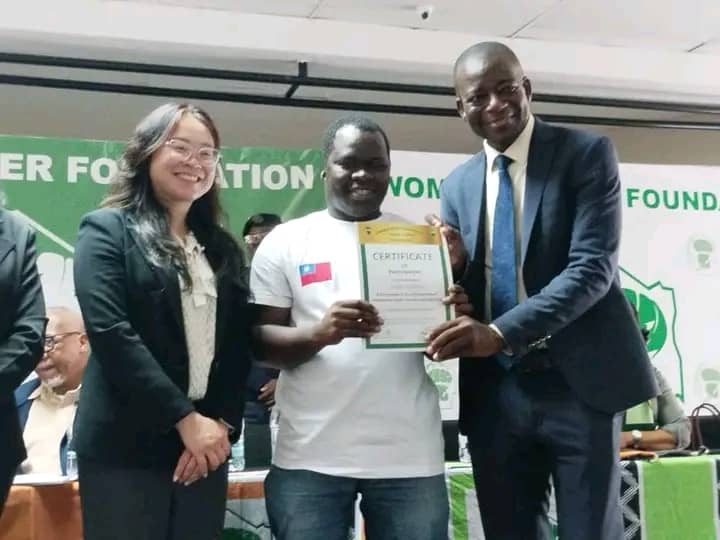
Mbabane – 163 young agripreneurs graduated the Innovative Climate-Smart Youth Tunnel Production project at Riders Ranch on Thursday.
Observing the graduation ceremony, which saw Cohorts 8 to 11 celebrated, the Minister of Sports, Culture and Youth Affairs, Bongani Nzima, representing the Minister of Agriculture, Mandla Tshawuka, said the occasion was a great honour to the graduates.
“The journey you have undertaken equips you with the knowledge, skills, and practical expertise needed to drive climate-smart agriculture in our country,” said Nzima
Their journey began with 172 enrolled for the programme. The 163 graduates were celebrated for their resilience and commitment to the agricultural sector. Tunnel farming and shade-net structures will allow young farmers to harvest year-round, mitigate climate risks, increase yields, and produce premium quality crops.


Nzima extended gratitude to the programme’s strategic partners, including the Embassy of Taiwan, which sponsored 160 students, Unicorn United Kingdom, which supported 12 students, and the Woman Farmer Foundation (WFF), the implementing institution.
Nzima also applauded WFF director, Sonia Paiva, and her team for their visionary commitment to empowering youth and promoting innovation in agriculture.
Nzima said that the programme aligns with national priorities outlined in the National Development Plan, the National Agriculture Investment Plan, the Climate-Smart Agriculture Framework, and the Youth Development Policy. Graduates are now equipped to contribute to increasing food productivity, food security and a market-driven agricultural economy.
“Your training in tunnel farming, entrepreneurship, and agribusiness management positions you as future leaders in our food systems,” said Nzima
He also emphasised the programme’s contribution to Eswatini’s climate commitments under the Nationally Determined Contributions (NDC 3.0) and global agreements such as COP30. Graduates are now capable of implementing solar-powered fertigation systems, drip irrigation, and protective tunnel cultivation, all aimed at reducing emissions, conserving water, and mitigating the impact of climate change.
The programme is also contributing to the Sustainable Development Goals, particularly in areas of poverty alleviation, zero hunger, gender equality, decent work, sustainable production, climate action, and partnerships. With a 65% female participation rate, the initiative continues to empower women in agriculture.


Nzima also urged the graduates not only to seek employment but to create it.
“Agriculture is no longer a sector of last resort.
“Graduates, today you begin your legacy. You are innovators, entrepreneurs, problem-solvers, and leaders. Remain committed, stay curious, and be resilient,” said Nzima


Discussion about this post