



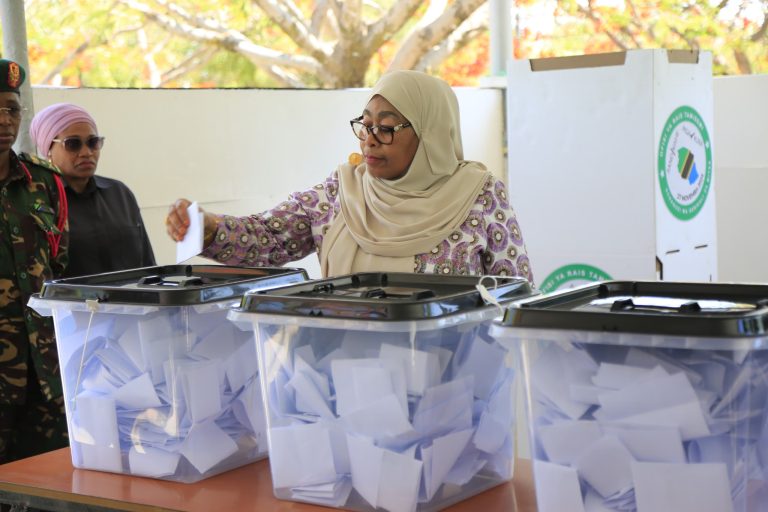
Dar es Salaam – Tanzanians are voting today, Wednesday, 29 May 2025, in a national election that is widely expected to see President Samia Suluhu Hassan secure another term in office after her two main rivals were disqualified from the race.
The polls, which opened at 6 a.m. and are set to close at 3 p.m., will determine the country’s next president, members of its 400-seat parliament, and leaders for the semi-autonomous Zanzibar archipelago. The National Electoral Commission has promised to release the results within three days.
President Hassan, representing the ruling Chama Cha Mapinduzi (CCM) party, faces only minor party challengers after the electoral commission disqualified both leading opposition candidates earlier this year. CCM, whose predecessor party led Tanzania’s independence movement in the 1950s, has ruled the country since 1977 and remains the dominant political force.
The election has been marked by controversy following the exclusion of the opposition’s two most prominent figures. CHADEMA leader Tundu Lissu, who is currently facing treason charges that he denies, was barred from contesting after his party refused to sign the electoral code of conduct. The commission also removed ACT-Wazalendo’s Luhaga Mpina from the ballot following an objection by the Attorney General.


The decision has drawn criticism from rights groups and opposition supporters who accuse the government of stifling political competition. Amnesty International released a statement last week accusing the authorities of suppressing dissent and creating a restrictive political environment. The government dismissed the accusations, calling them inaccurate and unfair.
Government spokesperson Gerson Msigwa said Amnesty had misrepresented the situation in Tanzania, insisting that the country’s legal and institutional systems protect citizens’ freedoms. Amnesty, however, said it had sought a response from authorities before publishing its findings.
Hassan, one of only two female heads of state in Africa, has spent weeks touring towns and villages across the nation of about 68 million people. Her campaign has centred on expanding road and railway infrastructure, increasing electricity generation, and creating more jobs. She has also pledged to hire more teachers to strengthen the education sector.


Since assuming power in 2021 following the death of her predecessor, John Magufuli, Hassan has been praised for easing restrictions on opposition parties and the media, which were heavily controlled during Magufuli’s rule. However, in recent years, civil society groups have raised concerns about renewed harassment and intimidation of government critics.
Rights campaigners and opposition figures have reported cases of unexplained abductions. Last year, Hassan ordered an investigation into the alleged disappearances, saying her government was committed to protecting human rights, though no official report has been made public. Earlier this month, a former ambassador to Cuba, now a vocal critic of the administration, was reportedly taken from his home by unidentified men. Police said investigations were underway.
According to the U.S.-based Armed Conflict Location & Event Data Project, CCM appears determined to maintain its position as the region’s last surviving liberation party, resisting the political shifts seen in countries like South Africa, Namibia, and Zimbabwe.


Discussion about this post