



Mbabane – A man who beat his own brother to death with a heavy iron rod in front of his five children has been convicted of murder by the High Court.
Thakhi Gama fatally assaulted his brother, Dumisani Gama, inside his home on December 30, 2013, after confronting him over a family wheelbarrow.
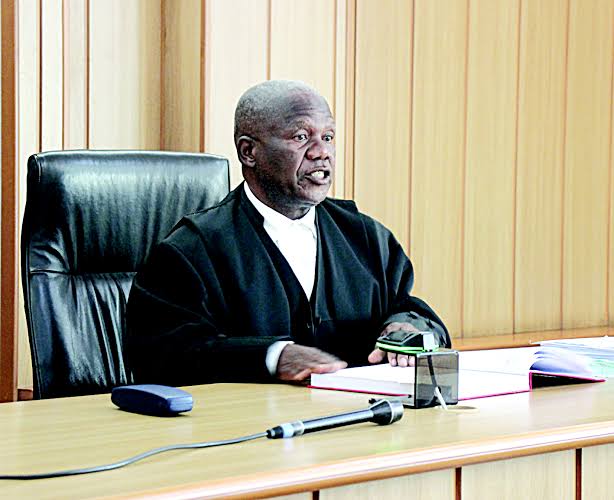
In a judgment delivered on September 28, 2026, Judge Mlangeni found Thakhi guilty of murder, rejecting his claim that he had acted in self-defence. The court found that he was the aggressor and had acted with dolus eventualis, meaning he foresaw that his actions could cause death but proceeded regardless.
The court heard that Dumisani’s children were having breakfast in the kitchen when their uncle arrived at around 8am demanding to know what had happened to his wheelbarrow, which two of the children had taken to wash blankets at a nearby river the previous day.


As the children tried to explain, the exchange became heated, prompting Dumisani to leave his bedroom, where he had been preparing to go to work, to find out what was happening.
Dumisani also explained that a water container being disputed belonged to him. However, the court heard that Thakhi charged at his brother, grabbed him by his clothes and said, “I have been waiting for this moment.”
One of Dumisani’s daughters, Tandzile Ayanda Gama, who was about 11 years old at the time, testified that Thakhi punched her father, causing him to fall against the stove.


Thakhi then grabbed a heavy iron rod used to tend the fire and repeatedly struck Dumisani on the head. Even after his brother fell to the ground, he continued hitting him with the rod and jumping on his head with his feet until he was powerless.
Another daughter, Nontsikeleo Gama, corroborated the account, telling the court that Thakhi was wearing boots when he jumped on his brother’s head.
Their mother, Larria Hlamkile Mahlalela, rushed into the kitchen after hearing the children screaming and found her husband lying helplessly on the floor with severe head injuries.
The family called the police and an ambulance, but heavy rain and slippery roads delayed assistance. Dumisani was eventually transported over a long distance on the same wheelbarrow at the centre of the dispute before they reached an ambulance at around 2pm.
He was admitted to hospital that day but died three days later.
A post-mortem report presented in court showed that Dumisani had suffered blunt-force injuries to the head, including two fractures that were fatal.
In his defence, Thakhi denied using the iron rod and claimed that Dumisani had attacked him with a slap and a fist before demanding his spear. He told the court that he had hit back and left after his brother fell.
However, Judge Mlangeni rejected his account, finding that there had been no attack on Thakhi and that the evidence of the two daughters was credible.
The judge also considered Thakhi’s conduct after the assault, noting that he walked away while his brother lay seriously injured and did not check on his condition, even after seeing him being transported on the wheelbarrow.
Thakhi later left the area and returned to South Africa, where he worked. His claim that he only learnt of his brother’s death months later was also rejected by the court.
The judge found that repeatedly striking a person’s head with a heavy iron rod showed that Thakhi must have appreciated that his actions could cause death.
The prosecution was found to have proved the murder charge beyond reasonable doubt.


Discussion about this post