



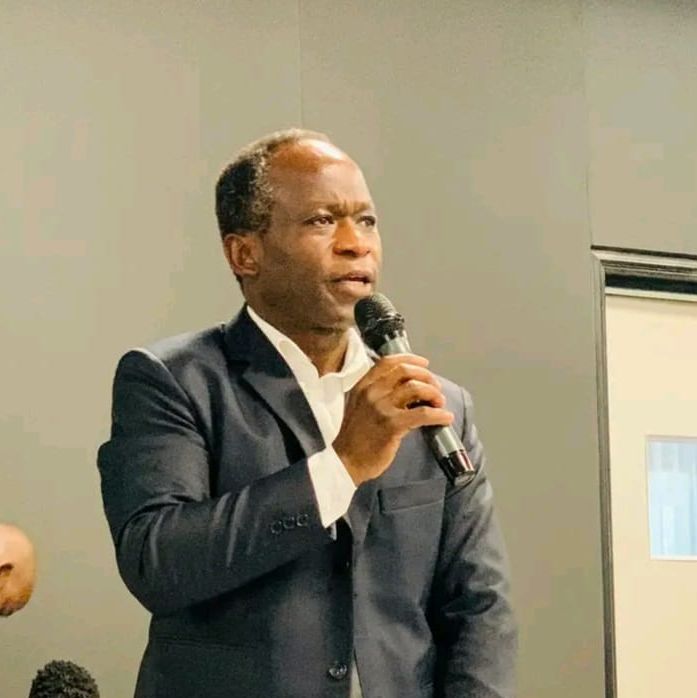
Lobamba – As Emaswati grapple with a fresh wave of increases in the price of bread, fuel, electricity and public transport, Lobamba Member of Parliament Michael Masilela has questioned why the elderly grant has remained at E600 per month.
The MP hit out at the proposed 25 per cent increase in short-distance bus fares, saying the same elderly citizens who are expected to absorb higher transport costs have not received a corresponding increase in the grant they depend on.
His comments come after the maximum bus fare for the first eight kilometres was recommended to rise from E10 to E12.50, while longer-distance fares are recommended to increase by 10 per cent. The recommendations are contained in the Ministry of Public Works and Transport Portfolio Committee’s report on the Maximum Bus and Taxi Fares (Amendment) Regulations, 2026.
The latest proposed transport increase comes after households have already been hit by a 4.23 per cent increase in regulated bread prices which took effect on October 1, 2026. An 800g brown loaf increased from E15.60 to E16.26, while an 800g white loaf went up from E17.90 to E18.66. The 700g brown loaf rose from E14.64 to E15.26, while the 700g white loaf increased from E16.36 to E17.05.


Fuel prices also increased by E3.43 per litre from October 2, with unleaded petrol 95 rising from E25.97 to E29.40 and diesel from E28.85 to E32.25. Illuminating paraffin increased from E21.73 to E25.16 per litre.
Electricity tariffs were also increased from April 1, 2026. The average adjustment was revised from the initially approved 13.61 per cent to 11.74 per cent after Government provided E200 million to cushion consumers.
It is against this backdrop that Masilela questioned the absence of a further increase in the elderly grant.
The grant was increased from E500 to E600 in the 2025/26 Budget, an additional E100 per month for each beneficiary. However, no further increase was included in the 2026/27 Budget. Parliament recorded that the 2025 increase represented a 20 per cent adjustment.
Masilela said Government needed to consider the reality faced by elderly citizens who have to use the same limited grant to pay for transport, food and other necessities whose prices continue to rise.
He recalled his own experience as a bus driver before becoming a businessman and later an MP, saying he had personally witnessed elderly passengers struggling to pay their fares.
Masilela said some elderly passengers would ask to pay less because they simply did not have enough money.
“I used to be a bus driver before I became an MP and a businessman. The elderly would ask to pay less because the money was not enough, and you would end up taking less than what was supposed to be paid because you could see that the elderly person did not have enough money,” he said.
He said the experience showed the difficult choices elderly citizens already had to make when using public transport.
Masilela said Government should therefore consider increasing the elderly grant whenever the cost of basic necessities and services rises.
“If things have increased, the money for the elderly must also increase,” he said.


The MP said elderly citizens should not be overlooked when decisions affecting the cost of living are made, particularly because many of them depend entirely on the monthly grant.
“It is the elderly who elected us. It is them who also board the buses,” Masilela said emotionally.
“Lokubuhlungu sengivela Emaswati konkhe lokukhulako kubheke Emaswati,” he said.
Masilela had previously raised concerns about the elderly grant during the 2026 Budget debate. In March, he argued that Government should consider redirecting funds from other allocations towards increasing grants for elderly and disabled citizens. Other MPs also called for an increase, with Government acknowledging the concerns but without announcing a concrete increase at the time.
The transport fare review was prompted largely by increased operating costs in the public transport industry, including higher fuel prices. The transport industry had initially proposed a 50 per cent increase, while the ministry proposed a lower adjustment. The National Road Transport Council subsequently submitted a proposal that resulted in the committee recommending a 25 per cent increase for the first eight kilometres and 10 per cent for longer routes.
The committee also acknowledged concerns over the effect of higher fares on low-income earners and elderly commuters.
Under the recommended fares, the cost of a 37km journey between Mbabane and Manzini via the MR103 would rise from E30.30 to E44.40, while the 41km MR3 route would increase from E33.10 to E48.80.
Mbabane to Pigg’s Peak would rise from E48.28 to E76.30, while Manzini to Mankayane would increase from E40.36 to E63.10.
For Masilela, however, the question is whether the financial pressures being used to justify higher transport charges are also being reflected in the support provided to elderly citizens.
The elderly grant currently reaches tens of thousands of beneficiaries, with Government reporting 90,073 beneficiaries receiving E600 per month during the 2025/26 financial year.


Discussion about this post