



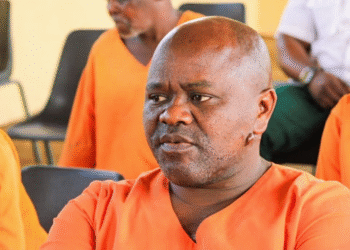
Mbabane – The High Court has clarified that Mfanawenkhosi Magagula was never ordered to be extradited to South Africa by the magistrate’s court, but was instead committed to custody while awaiting a decision by the Minister of Justice and Constitutional Affairs.
Justice B.S. Dlamini made the clarification in a judgment dismissing Magagula’s appeal against the decision of the Manzini Principal Magistrate to commit him to Sidwashini Correctional Facility pending the Minister’s decision on his possible surrender to South Africa.
The judgment was delivered on September 15, 2026, after the matter was heard on July 11.
Magagula had initially appealed the magistrate’s decision on seven grounds, challenging, among other things, the admission of supplementary evidence and the sufficiency of documents supporting the extradition proceedings.


He later abandoned those grounds and filed an amended notice of appeal containing only one ground.
His new argument was that the extradition request was irregular because it had allegedly been made by South Africa’s National Director of Public Prosecutions rather than the South African Minister of Justice and Constitutional Development.
The respondents opposed the argument, maintaining that the request had been made by the relevant Minister.
The High Court found that the amended ground was based on an incorrect understanding of what had occurred before the magistrate.
Justice Dlamini said the magistrate’s court had not entertained an extradition application made by South Africa’s National Prosecuting Authority.
Instead, the local DPP had applied for Magagula’s committal to custody pending the determination of the extradition request by Eswatini’s Minister.
The court was presented with correspondence from South African Justice Minister M.T. Kubayi dated March 31, 2026.
The correspondence confirmed that the request had initially been received by the South African Department from the NDPP, but that the Justice Ministry had subsequently considered the matter.
Kubayi confirmed that she would have approved the request being forwarded to South Africa’s Department of International Relations and Cooperation for transmission to Eswatini.


Justice Dlamini held that the extradition request had therefore been rectified by the South African Minister before Eswatini made any decision on Magagula’s surrender.
The court found that the process was consequently in line with the extradition agreement between Eswatini and South Africa as well as the Extradition Act of 1968.
Under Section 10 of the Extradition Act, where a court of committal finds that a person is liable to be surrendered and that there would be sufficient reason for putting the person on trial had the offence been committed in Eswatini, it may commit the person to prison pending the Minister’s decision on surrender.
The court stressed that this was the order made against Magagula.
The order stated that he was to remain at Sidwashini Correctional Facility until the Minister decided on his surrender to the requesting state.
It further provided that no surrender would take place while an appeal against the committal decision remained pending.
Justice Dlamini said there was currently no substantive application before the court challenging the South African extradition request itself.
The High Court ultimately dismissed Magagula’s appeal and made no order as to costs.
The judgment also rejected his argument that the Attorney General, rather than the DPP, should have brought the committal proceedings, finding that the relevant extradition processes and documentation fall within the domain of the prosecuting authorities.

Discussion about this post