



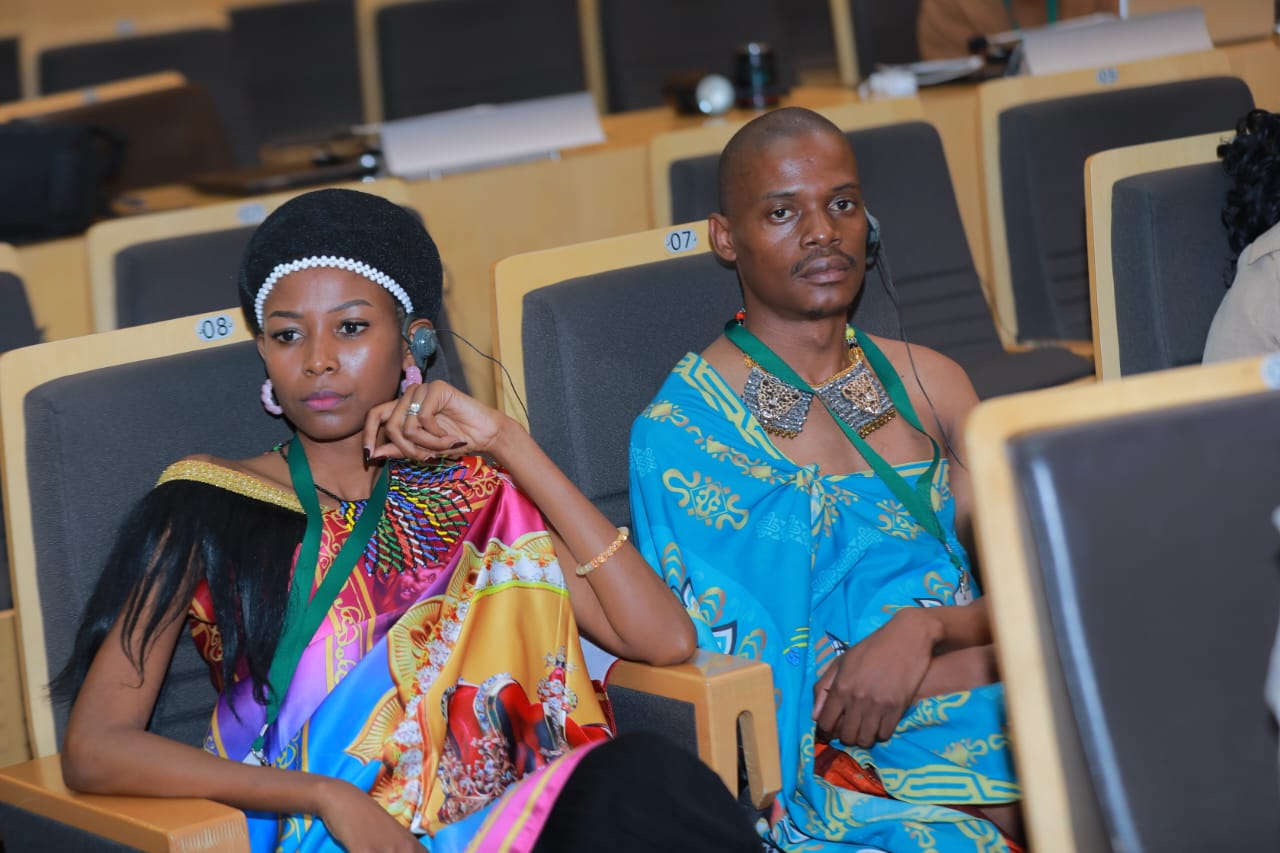
MBABANE- Eswatini’s youth voices recently took their place on a continental platform as two young representatives participated in the African Union Continental Youth Capacity-Building Programme on AU Shared Values Instruments, held from 25 to 28 August 2026 in Addis Ababa, Ethiopia.
Representing the Kingdom of Eswatini were Badelisile Bianca Mdluli and Mlandvo Mbhekwa Mkhweli, who joined young people from across Africa for four days of intensive learning, dialogue and practical leadership development.
Organised under the African Union Commission’s Department of Political Affairs, Peace and Security, the programme focused on democratic governance, youth participation, leadership, peacebuilding and the African Union’s shared values.
The programme sought to equip young Africans with a deeper understanding of the institutions, frameworks and mechanisms through which they can participate in governance and contribute to continental development.


The opening sessions introduced participants to the African Union, its decision-making structures and normative frameworks, while highlighting the role of young people in shaping Africa’s future.
Participants subsequently explored the electoral cycle, youth participation in electoral processes and different forms of youth engagement through practical exercises and role play.
For Mkhweli, one of the programme’s greatest strengths was its focus on practical leadership rather than theory alone.
Participants took part in sessions covering emotional intelligence and ethical leadership, communication and leadership simulations, barriers to youth participation, design thinking and solution building.
The programme later delved into issues at the heart of Africa’s governance and peacebuilding landscape, including dispute resolution, negotiation and mediation, youth-led advocacy and lobbying, digital leadership, action planning and youth leadership commitments.
“Meaningful youth participation requires more than simply inviting young people into a room,” Mkhweli reflected.
Young people, he noted, need to understand the systems they seek to influence. They also need access to information, the confidence to communicate their ideas, the ability to negotiate, advocacy skills and the capacity to turn ideas into practical action.
This participatory approach was central to the programme. Instead of simply listening to presentations, participants were challenged to think critically, communicate, negotiate, solve problems and work collectively.
Building African Connections
Beyond the formal training sessions, the programme provided an opportunity for young Africans to connect and exchange experiences.
Mkhweli said meeting participants from different countries created valuable opportunities to share stories about communities, cultures, aspirations and challenges.
While the circumstances of different countries may vary, many of the issues confronting young Africans remain remarkably similar.
Employment, education, migration, governance, peace and access to opportunities continue to shape the experiences of young people across the continent.
These shared challenges, Mkhweli believes, demonstrate the importance of African youth coming together to develop solutions and strengthen collaboration across borders.
The experience also prompted deeper reflection on what it means to be a young African leader.
For Mkhweli, continental leadership should extend beyond representing one’s country at international events.
It should also involve returning home with knowledge, relationships and ideas that can be transformed into meaningful action.
Bringing the Lessons Home
This, he believes, is particularly important for Eswatini.
Participation in continental spaces should not end with attendance. The true value of such opportunities lies in what happens afterwards, how knowledge is shared, how other young people are engaged and how newly established networks can be used to create opportunities for collaboration.
Mkhweli’s work sits at the intersection of youth development, systems innovation, entrepreneurship and sustainability.
Through RE-versal, he has been involved in initiatives focused on community innovation and environmental action, including youth participation in environmental mapping and digital initiatives.
His regional policy work as Committee Secretary of the Cooperation, International Relations and Conflict Resolution Committee of the Pan-African Youth Parliament has also provided exposure to the relationship between youth, migration, economic opportunity, governance and regional stability.


The African Union programme added another layer to this experience, providing practical exposure to continental governance, advocacy, diplomacy, leadership and meaningful youth participation.
Beyond the Classroom
The four-day programme concluded with an official certificate ceremony, followed by visits to selected historical and educational sites in Addis Ababa.
Participants visited the Adwa Victory Memorial Museum, the Palace Museum and the Ethiopian Science Museum, gaining an opportunity to explore Pan-Africanism, political history, cultural heritage and education beyond the formal training environment.
For Mkhweli, the experience represented far more than four days spent in Addis Ababa.
It served as a reminder that Africa’s future will depend not only on the policies created by institutions, but also on whether young people are equipped and empowered to participate meaningfully in shaping those policies and the systems surrounding them.
As Eswatini’s representatives, Mdluli and Mkhweli carried the perspectives of the country’s youth into a continental space.
They now return home with more than certificates.
They return with knowledge, new relationships and a responsibility to ensure that the experience creates value beyond their personal development.
Ultimately, the real measure of the programme will be what participants do with what they learned.
If youth participation is to become truly meaningful, young people must move beyond simply being invited to conversations and become active contributors to decisions, solutions and implementation.


Discussion about this post