



If Precious asks her client to use a condom, she can charge him 100 lilangeni – about £4.50. If she agrees not to use one, she can charge double. The financial incentive for sex workers in Eswatini not to use protection is obvious – as is the risk, in a country where one in four people are infected with HIV.
Last year, Precious visited a clinic with five other sex workers to get tested. Four of them had the virus.
Eswatini, formerly known as Swaziland, has the world’s highest HIV prevalence. It records about 4,000 new HIV infections a year among its population of 1.2 million.
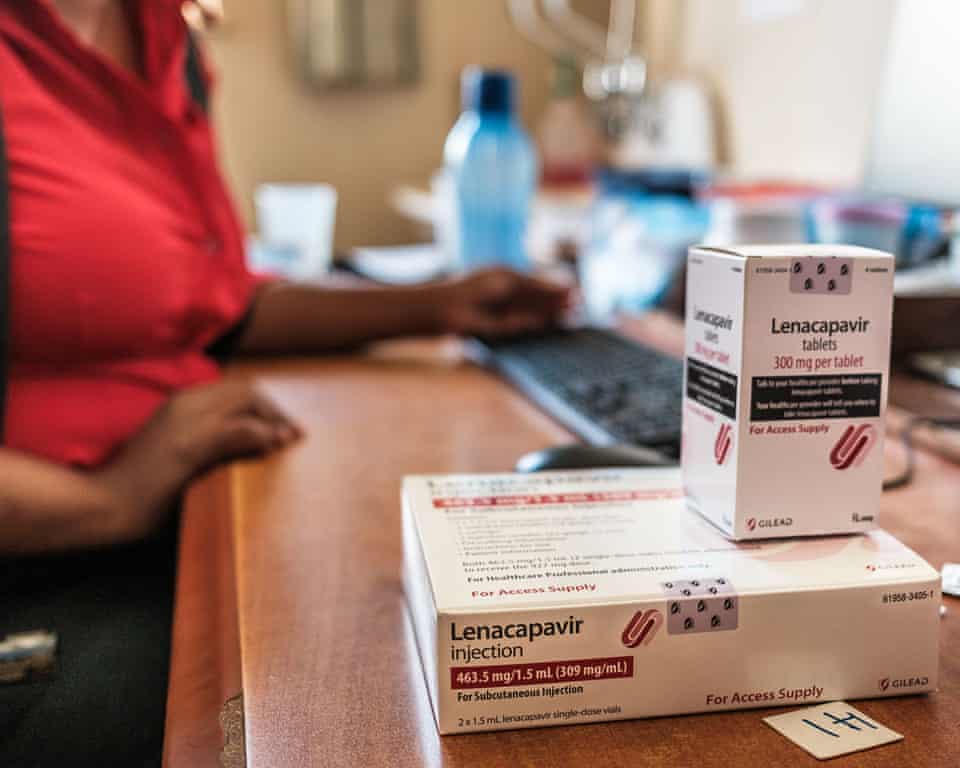
Its leaders hope that a new “miracle” drug, lenacapavir, will finally turn off the tap of new infections. Lenacapavir, given as an injection every six months, can prevent people from contracting HIV. Although it is not technically a vaccine, it is being referred to as one by patients and clinicians alike in this southern African country, one of the first to roll it out.


The question is whether lenacapavir will reach Eswatini – and other countries in the region – in sufficient quantities and at sufficient speed to turn the tide. It is arriving in the wake of hugely disruptive US aid cuts, which have hit HIV prevention efforts in many parts of sub-Saharan Africa.
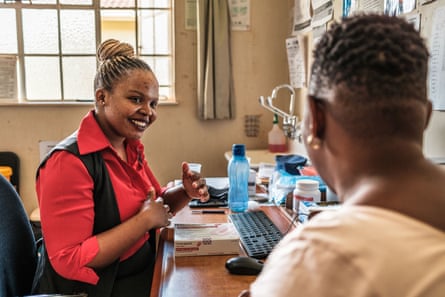
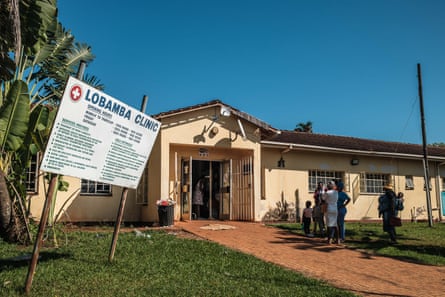
Precious, 32, is visiting the Lobamba clinic today, hoping to receive the jab. She is just in time, as staff expect to run out within days. The clinic has received 130 doses, and given more than 100 already.
At the country’s central medical store, the shelf for lenacapavir is almost bare. They have 730 doses in stock, with 500 ringfenced as second doses for people who had their first jabs in December and January, shortly after the drug reached the country.
The Global Fund to Fight HIV, Tuberculosis and Malaria is providing the country with 6,000 doses in 2026; 4,200 have arrived so far, with the remainder due in April. A further US government-funded shipment is expected later this year.

The amount of lenacapavir, also known as len, that has arrived so far is “not even a drop in the ocean if you consider we’re trying to prevent new infections”, says Dr Nkululeko Dube, the country programme director for the Aids Healthcare Foundation Eswatini. As of 19 March, 2,995 people in Eswatini had started taking lenacapavir. “The coverage so far has been very, very, very low. But my impression is that interest is extremely high.”
Precious walks with a limp. Her husband beat her and broke her leg. “He almost killed me,” she says. She fled, taking her two children, and with no qualifications, turned to sex work.
Up to 60% of people in Eswatini live below the poverty line. Precious estimates that she needs at least 4,000 lilangeni a month to meet her expenses, including school transport for her children, who now live with her blind mother. Being a divorced woman means she can’t get the necessary letter of recommendation from community leaders to receive help with her son’s school expenses.
Other types of pre-exposure prophylaxis (Prep) to stop HIV infection are available, including daily pills, a vaginal ring and a shorter-acting injection called Cab-LA, which is given every two months. But Precious says she hasn’t got on with those. When it came to daily pills, it was hard to stick to a regular schedule.
“I was supposed to take them at 8pm,” she says. “At eight I’m sometimes with a client, or in a bar dancing, looking for clients, and I forget about the time.”
The struggle to find a type of Prep that works for her is a common story, says Sindy Matse, the programme manager for the Eswatini National Aids Programme. People don’t like taking a pill every day. Women complain that the vaginal ring sometimes falls out, or their partners believe they can feel it during sex and do not like it. Cab-LA is painful, they say – and also only available in smaller amounts.
“So we are banking on len that is going to be the gamechanger,” Matse says. “However, we need more.”
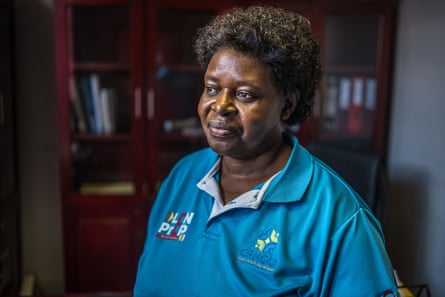
Matse says it is difficult to determine exactly how many of Eswatini’s 800,000 HIV-negative citizens would benefit from Prep; in 2022, about 32,000 people were using some kind or other, but “people are fluid, today they want Prep, tomorrow they stop, they want to go back to condoms [or] they are no longer at risk”, she says.
Eswatini has a young population, she adds. “And those are the people that we are targeting.”


Three-quarters of new infections are in teenage girls and young women. Young women waiting downstairs in Dube’s clinic for Prep say that, typically, they cannot insist their partners use condoms, or trust them to be faithful.
They are a government priority group for lenacapavir, alongside pregnant and breastfeeding mothers, and sex workers.
Matse says: “In our guideline, we’ve made it very clear that anyone who’s requesting len we shouldn’t deny them.” Restricting it only to those who meet certain criteria, she fears, risks stigmatising that group, suggesting they are the people spreading HIV in the country. “So we don’t want that.”
There are other groups at high risk of HIV infection, including men who have sex with men, transgender women, people who inject drug.
More info from Kat Lay in Mbabane

Discussion about this post