



MBABANE – Several employees at the Hlathikhulu Town Board were allegedly hired without undergoing interviews, while confusion over recruitment responsibilities exposed deep governance and human resource failures within the institution.
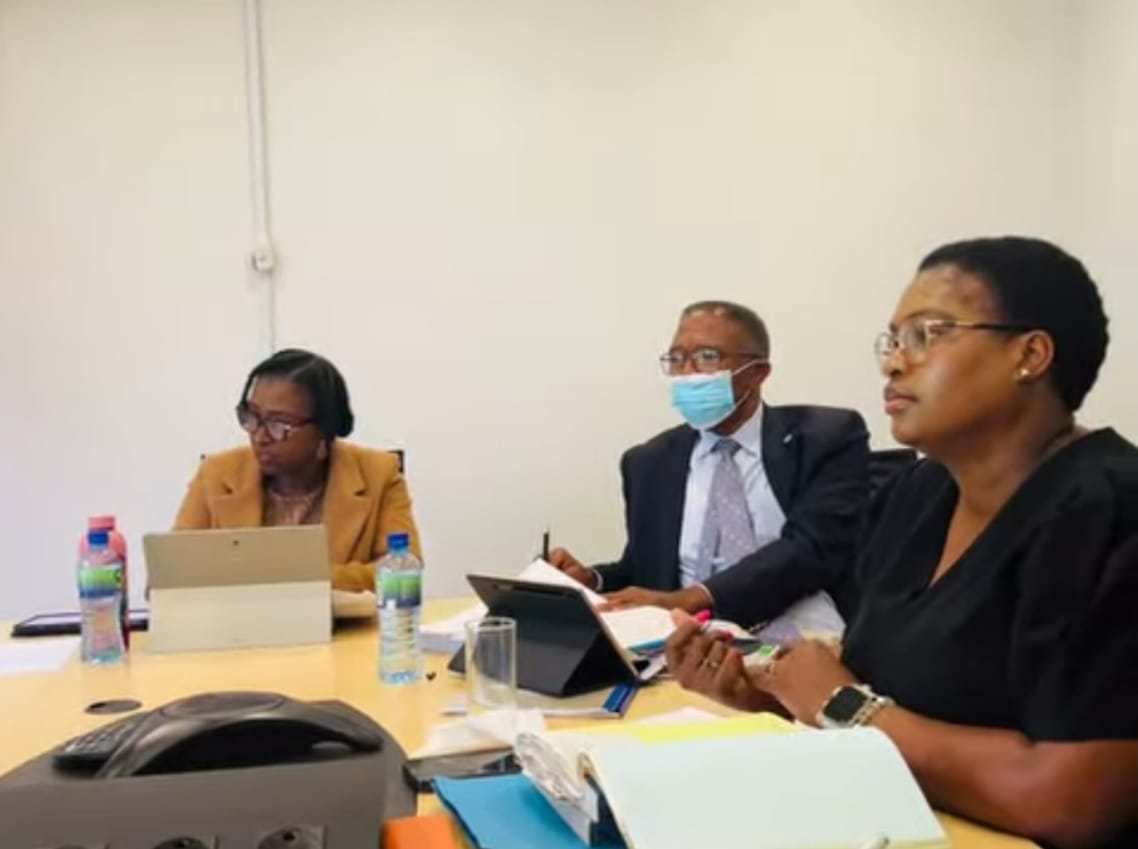
This emerged during a Commission of Inquiry established by the Ministry of Housing and Urban Development to investigate maladministration and irregularities at the town board.
According to the commission’s report, multiple employees testified under oath that they secured employment without being interviewed.
The inquiry heard conflicting accounts from senior management regarding who was responsible for recruitment processes.


Town Clerk Bongani Dlamini reportedly told the commission that the accountant managed recruitment and merely submitted names of successful candidates for his approval. Although the Town Clerk maintained that interviews were conducted, no documentary proof such as interview records or assessment reports was produced before the commission.
The accountant, Artwell Phesheya Dlamini, however denied responsibility for recruitment, insisting that authority rested with the Town Clerk.
When confronted with the contradiction, the accountant reportedly told the commission he acted only under instruction as a subordinate employee.
“The commission noted an absence of clearly defined roles within the board, as well as inadequate capacity,” the report stated.


The inquiry further found that recruitment functions ordinarily expected to be handled by a human resources officer were not properly structured within the institution.
The commission also highlighted a breakdown in separation of duties within the finance department.
According to testimony, the roles of Treasurer, Accountant and Accounts Clerk overlapped significantly, with no clear job descriptions or organisational structure to guide responsibilities.
Former Town Treasurer evidence reportedly revealed that she did not collaborate with the accountant despite him supposedly reporting to her. She also indicated that she only approved payments after the CEO had already authorised them, suggesting confusion regarding authority and accountability structures.
The Accounts Clerk further testified that she prepared all payment documentation and processed payments under instructions from the accountant.
The commission concluded that financial operations were largely executed at lower administrative levels without adequate oversight controls.
The inquiry also heard troubling allegations regarding the workplace environment at the town board.
Several employees testified that the accountant created a hostile and intimidating atmosphere by shouting at staff members and threatening dismissals.
One employee reportedly appeared before the commission in disguise out of fear of victimisation.
Board members also testified about intimidation dynamics within the institution, alleging that the accountant interfered in governance matters and told councillors certain issues were not their concern.
The Chairperson of the board reportedly admitted during testimony that he felt threatened and fearful.
The commission additionally examined concerns raised about the accountant’s visual condition after a resident questioned whether he was capable of effectively performing duties requiring attention to detail.
During proceedings, the commission observed that the accountant requested assistance from the secretary while taking an oath.
Both the Town Clerk and Accounts Clerk confirmed that the accountant experienced visual challenges. However, the accountant maintained that he had been medically cleared and that his condition did not affect his professional performance.
He further cited his two-year contract extension beyond retirement age as proof that management remained satisfied with his work.
Despite this, the commission noted that it heard no evidence showing the Town Clerk had implemented provisions of the Occupational Safety and Health Act to formally address the matter.
The inquiry ultimately concluded that weak governance structures, lack of role clarity and ineffective oversight contributed significantly to the collapse of internal controls at the town board.
The report described the institution as operating in an environment where legal procedures were routinely ignored and accountability mechanisms weakened.

Discussion about this post