



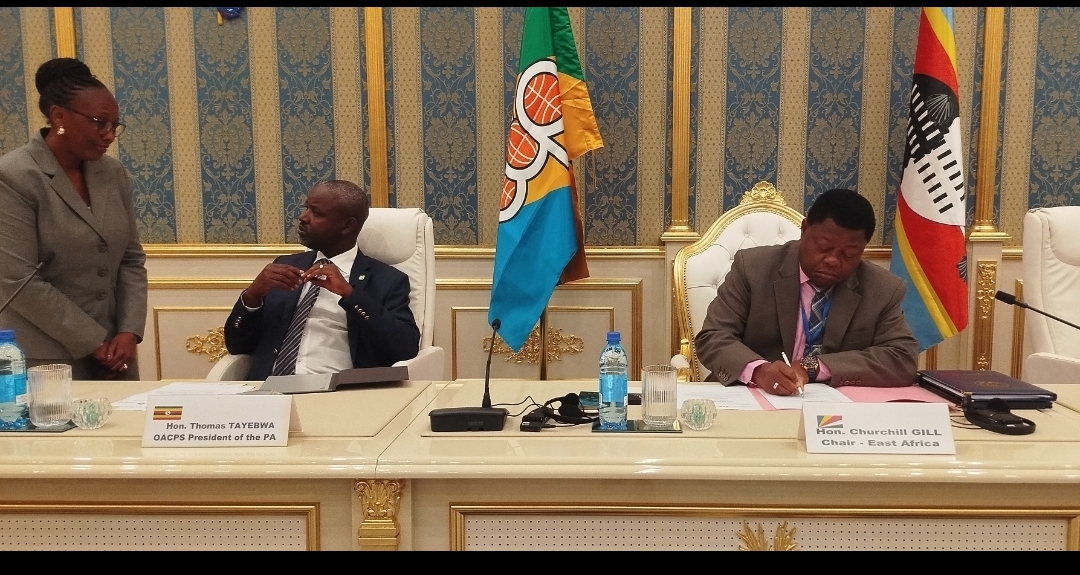
Ezulwini- The Samoa Agreement is expected to reshape relations between the European Union (EU) and member states of the Organisation of African, Caribbean and Pacific States (OACPS) through a renewed partnership centred on governance, economic growth, climate action, peace and migration.
This emerged during presentations delivered at the ongoing OACPS African Region Parliamentary Group Meeting and the Africa-EU Parliamentary Assembly currently taking place at the Ezulwini Palazzo International Convention and Conference Centre.
Delegates attending the high-level meetings were taken through the framework, priorities and institutional structure of the Samoa Agreement, which replaces the Cotonou Agreement that governed relations between the two blocs since 2000.
Presenters explained that the new agreement seeks to modernise cooperation between the EU and OACPS countries by moving away from what was described as a largely aid-based relationship toward a more strategic and mutually beneficial partnership.


According to the presentations, the agreement aligns with major global development frameworks, including the United Nations 2030 Agenda for Sustainable Development and the Paris Agreement on climate change.
It is expected to strengthen collaboration in areas such as governance, trade, security and sustainable development.
The treaty is built around six priority areas, namely human rights, democracy and governance; peace and security; human and social development; inclusive and sustainable economic growth; environmental management and climate change; as well as migration and mobility.


Under the governance pillar, the agreement promotes justice, public administration reforms and institutional development. The peace and security component focuses on conflict prevention, crime, counter-terrorism and cybersecurity cooperation.
The human and social development section covers health, education, employment creation, gender equality, youth empowerment and social protection, while the economic growth pillar encourages investment, industrialisation, infrastructure development, trade, tourism, energy and digital transformation.
Environmental sustainability also forms a key part of the treaty, with emphasis placed on biodiversity protection, climate resilience, energy transition and sustainable management of natural resources.
Meanwhile, the migration and mobility framework seeks to address regular migration pathways, diaspora engagement, return and readmission procedures, as well as the root causes of migration.Delegates were further briefed on the institutional structure of the agreement, which consists of a general framework and three regional protocols covering Africa, the Caribbean and the Pacific.
The Africa Protocol specifically focuses on issues affecting the continent, including economic growth, governance, climate change, peace and mobility.
The presentations stressed that the Samoa Agreement is intended to deliver shared outcomes based on common priorities between the EU and OACPS member states, while taking into account the unique realities of each region.
The agreement is expected to guide cooperation between the parties for the next 20 years.Meanwhile, proceedings at the Palazzo continued yesterday with the second session of the OACPS African Region Parliamentary Group Meetings, where the East Africa Regional Group was scheduled to take the floor.
Lawmakers from across Africa and Europe are gathered in Eswatini for what has been described as a landmark moment in inter-parliamentary dialogue.Chairperson Churchill Gill stressed the importance of ensuring that all member states ratify the agreement before full implementation begins.He said ratification by all parties was critical to ensuring the successful execution of the treaty and the achievement of its objectives.

Discussion about this post