



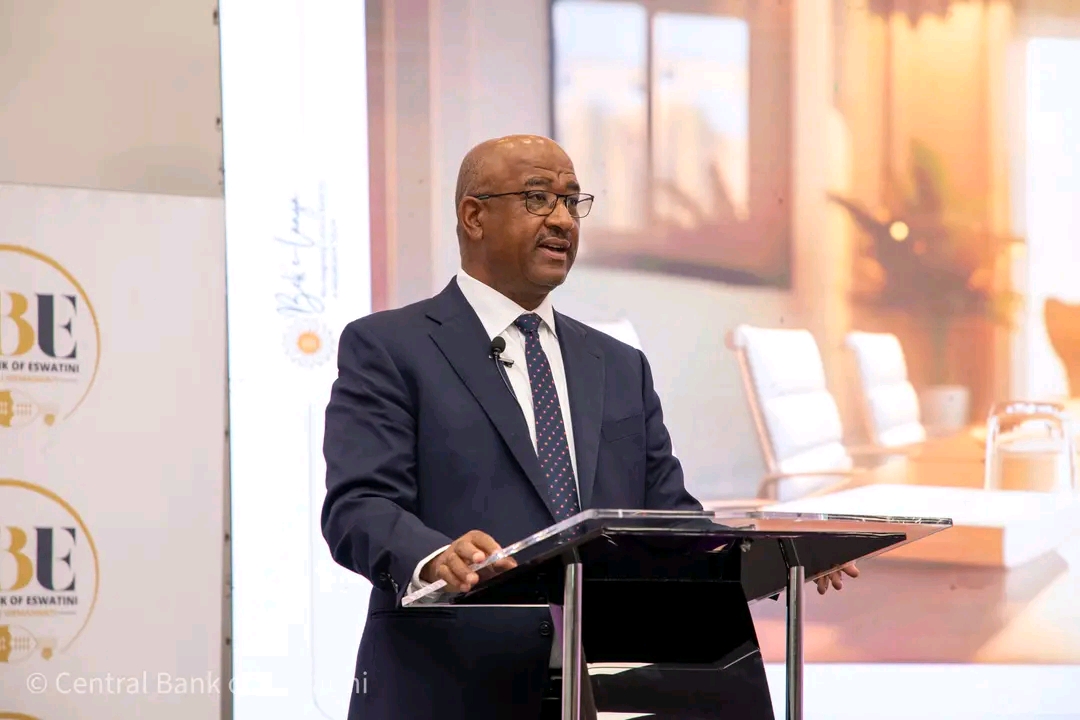
Mbabane- Eswatini’s public debt has surged to E41 billion, with government increasingly relying on both local and international borrowing to finance projects and support its budget, Central Bank Governor Phil Mnisi has revealed.
Delivering the latest Monetary Policy Statement, Mnisi said total public debt stood at 42.7 per cent of Gross Domestic Product (GDP) as at March 2026, representing a 13.3 per cent increase compared to the same period last year.
The Governor attributed the rise to growth in both domestic and external debt, with external borrowing recording the sharpest increase.
“As at March 2026, total public debt stood at E41.0 billion, representing 42.7 per cent of GDP and reflecting an annual increase of 13.3 per cent,” said Mnisi.

He explained that domestic debt increased by 7.5 per cent, mainly driven by the continued issuance of government securities such as Treasury bills and bonds. Government also utilised central bank advances during the period under review.


“The expansion in domestic debt was largely supported by the continued issuance of government securities, including Treasury bills and bonds, as well as the utilisation of central bank advances,” he said.
Mnisi further disclosed that external debt rose by 20.3 per cent, largely due to disbursements linked to ongoing projects financed by international lenders.
According to the Governor, some of the key disbursements included funding for the Water Supply and Sanitation Access Project, financed by the International Bank for Reconstruction and Development (IBRD), as well as a budget support facility from the OPEC Fund for International Development.
The latest figures come amid growing scrutiny over government borrowing and fiscal sustainability as the country continues to face pressure to finance infrastructure development and public expenditure.
Over the years, government has increasingly turned to the domestic market to raise funds through Treasury bills and bonds, with commercial banks, pension funds and institutional investors among the major buyers of the securities.
The debt increase also reflects government’s continued dependence on external financiers to support developmental projects and bridge financing gaps.
While the debt-to-GDP ratio remains below international benchmark thresholds often used to assess debt sustainability, concerns have previously been raised by economic analysts over the pace of borrowing and the long-term impact of debt servicing costs on public finances.
Mnisi’s remarks form part of the Central Bank’s broader assessment of economic conditions and fiscal developments in the country.
The Monetary Policy Statement is closely monitored by investors, financial institutions and economic analysts as it provides an indication of government borrowing trends, financial sector performance and the overall state of the economy.
The latest debt figures are expected to intensify discussions on the country’s fiscal direction, particularly as government continues balancing economic recovery efforts with increasing expenditure demands.


Discussion about this post