



Davos – The World Economic Forum has released its January 2026 Chief Economists’ Outlook, offering a snapshot of the global economy as leaders gather in Davos, Switzerland, with resilience holding firm despite mounting risks linked to trade tensions, geopolitics and rapid technological change.
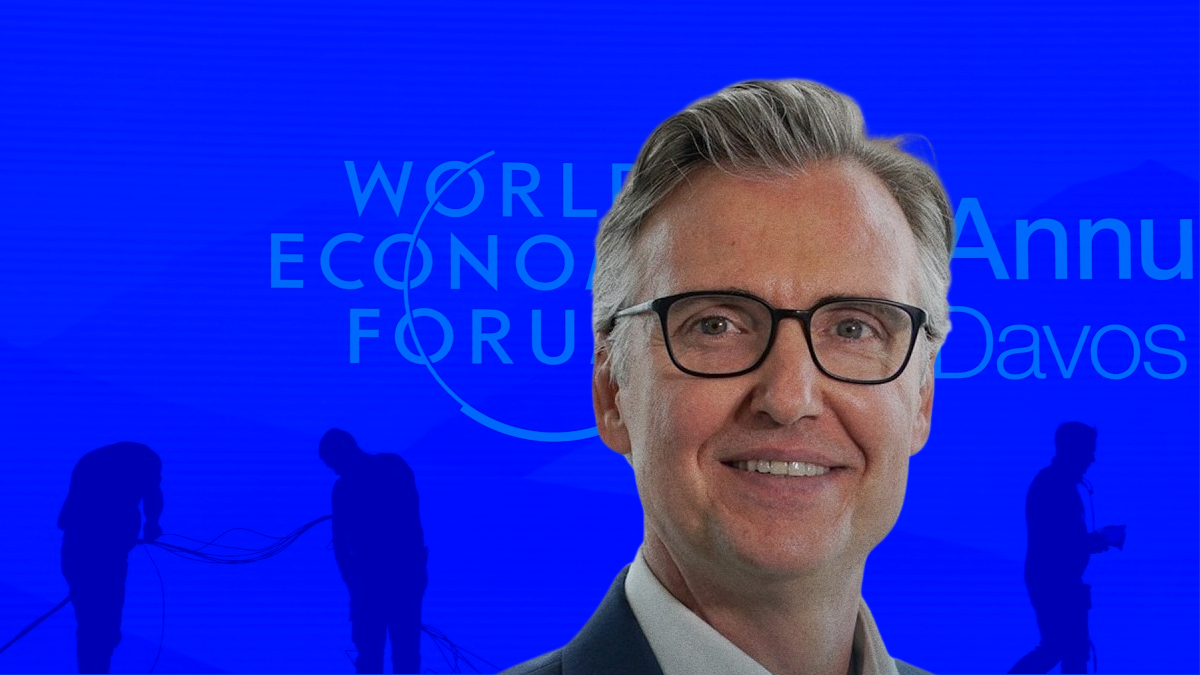
The outlook was unpacked on the Radio Davos podcast, hosted by World Economic Forum Economics Editor John Letzing, in conversation with Christian Keller, Head of Economics Research at Barclays Investment Bank. The discussion comes as policymakers, business leaders and economists assess prospects for 2026 amid lingering uncertainty following tariff disputes, inflation shocks and an unprecedented surge in artificial intelligence investment.
Keller described the report as a useful planning tool drawn from a diverse group of chief economists across sectors including mining, technology and retail. “It’s a good instrument to have to go into the year,” he said, adding that while forecasts are rarely perfect, the survey offers a consistent view of how economic thinking evolves over time.
According to Keller, the current mood among economists reflects “a tension” between negative fundamentals and surprisingly strong market performance. He pointed to fragmented global trade, rising geopolitical strain and investment realignments as developments that would normally weigh heavily on growth. At the same time, financial markets have continued to rally, driven largely by the boom in artificial intelligence.


“I think AI plays a big role,” Keller said. He explained that heavy investment in AI has supported growth through direct spending on technology, data centres and energy infrastructure, while also lifting asset prices and household wealth, particularly in the United States. This, in turn, has supported consumption and offset some of the drag expected from tariffs.
The discussion also revisited fears that tariffs would severely damage global growth. Keller acknowledged that economists had revised forecasts upwards several times after earlier pessimism. He attributed this to delays in tariff implementation, numerous exemptions, front loading by firms that stocked up ahead of higher duties, and widespread trans shipment of goods through third countries. “The tariffs were less in a way than initially feared,” he said, while warning that price pressures could still surface in 2026 as inventories run down.
For economies such as Eswatini, which are closely tied to global trade flows and South Africa’s performance, the outlook carries mixed implications. Continued resilience in major economies supports demand and investment across the region, but renewed tariff pass through, higher costs and slower global growth would have knock on effects on exports, prices and household incomes.
On employment, Keller rejected the idea that AI would inevitably lead to mass job losses, noting that technological change has historically created new forms of work. “Jobs will certainly be lost in certain areas,” he said, but added that new roles often emerge in ways that are difficult to predict. He cautioned, however, that AI could widen income inequality, as workers whose roles are complemented by technology earn more than those exposed to automation.


The possibility of an AI driven bubble also featured prominently. Keller said concerns were justified, given the scale of investment and elevated valuations, but argued that the current boom differs from past episodes such as the dot com era. He noted that much of the investment is funded by large, profitable firms rather than excessive household debt. “Even if it is a bubble, it’s probably a good bubble,” he said, pointing to long term benefits from building digital infrastructure that could raise productivity globally.
Inflation and cost of living pressures remain central to the outlook. Keller said public frustration is driven less by current inflation rates than by persistently high price levels. He observed that while Europe has largely returned to its two percent inflation target, the United States continues to face higher inflation, creating tension between growth friendly policies and the need for tighter macroeconomic conditions. These dynamics matter for smaller economies like Eswatini, which import inflation through fuel, food and other essentials.
On public debt, Keller explained that some governments may tolerate higher inflation to erode debt burdens rather than pursue painful fiscal adjustments. He warned that such strategies often rely on financial repression and may only delay tougher decisions. Defence spending is expected to rise globally, while environmental protection budgets could come under pressure as governments reprioritise amid fiscal constraints.
The conversation also touched on central bank independence, which Keller described as critical to maintaining low and stable inflation. “History has shown that when central banks became independent, that contributed to reducing inflation,” he said, cautioning against political interference despite recent criticism of monetary policy responses during the pandemic.

Discussion about this post