



Mbabane – Young people have been encouraged to actively participate in community development initiatives and take up leadership roles to ensure their voices are heard in matters that shape their communities.
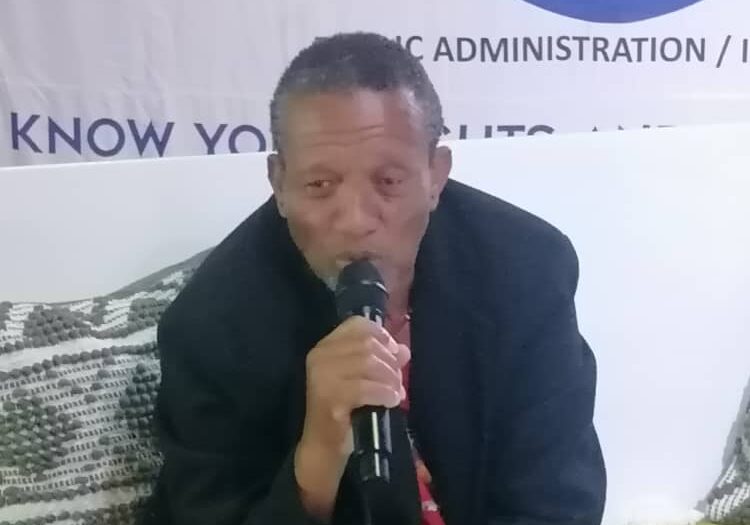
This call was made by Zombodze Indvuna’s representative, Mphatfwa Dlamini, during the Human Rights Commemoration Day held at the Mbabane Theatre Club. Dlamini emphasised the importance of youth involvement in community affairs, saying young people possess creativity and innovative ideas that are essential for community growth.
He revealed that at Zombodze Umphakatsi, two young people have already been elected into the Bandlancane (inner council), which he described as a positive step towards youth inclusion in leadership. However, he acknowledged that the council currently lacks representation of persons living with disabilities, adding that community leaders were working to correct this.
“As community leaders, we are working on correcting that. We want to ensure that more young people and people living with disabilities are included in our leadership structures,” said Dlamini.

Dlamini also called on men to lead with integrity, noting with concern that the family and community structure was slowly falling apart because some men were failing to lead. He reminded men that they are the leaders of their families, and when they fail at home, those cracks will show even at community level and ultimately at national level.
He stressed that a man’s duty is to lead, provide and protect his family. Dlamini strongly condemned the rising cases of gender-based violence, saying a man should never lay his hands on a woman.


“That is a sign of a weak man,” said Dlamini, adding that men are called to protect, not to harm their families.
Meanwhile, Bulelani Matsebula, Director of the Swazi Youth Network, said young people continue to face challenges when trying to acquire land for building their homesteads. He explained that in some communities, young men are only allocated land once they have a wife, a requirement that disadvantages many unmarried youth.
Matsebula also highlighted that young people remain under-represented in leadership structures and excluded from key decisions of national interest. He said the organisation recently conducted research in which youth were asked to propose solutions that would enhance their inclusion in national development.
He said the youth strongly recommended a 40:40:20 leadership representation model, where 40% of leadership positions would go to women, 40% to men and 20% to youth.
“The youth are strongly calling for advocacy that pushes for their inclusivity in community leadership structures. They want to take part in nation-building in a meaningful way,” Matsebula said.

Discussion about this post